Ձվատու հավերի փետրակծման հայտնաբերում
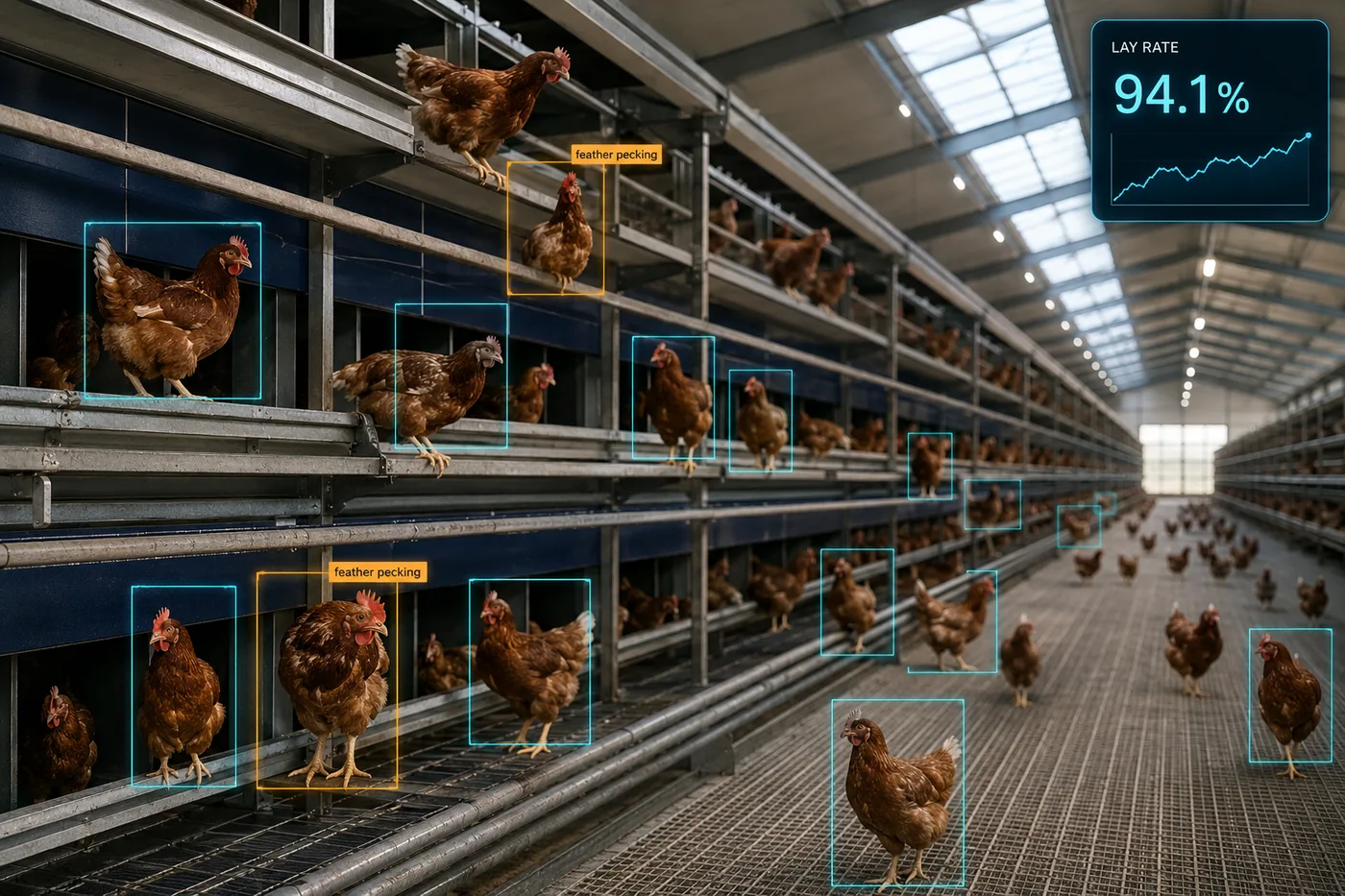
Ձվատու հավերի փետրակծման հայտնաբերումն օգտագործում է տեսախցիկներ և համակարգչային տեսողություն՝ շարունակաբար դիտելու հոտը՝ բռնելով առաջին կտրումները, առաջին մերկ հատվածքները և բաշման փոփոխությունը, որը վկայում է, որ փետրակծումը սկսվել է՝ նախքան այն տարածվի և նախքան ձվատվությունը սահի։ DeepLoop-ն աշխատեցնում է ստանդարտ տեսախցիկների վրա, որոնք դուք ինքներդ եք ապահովում, և յուրաքանչյուր հայտնաբերումը վերածում թարմացված հաշվարկի, մահացության գրառման և ձվատվության տեմպի հաշտման։
Ձվատու հավերի փետրակծումը դանդակ աղետն է՝ այն սկսվում է մի քանի թռչուններից, տարածվում է տնակով, և մինչև դուք տեսնում եք այն շրջմույթի ժամանակ, ձվատվությունն արդեն սահում է գագաթնակետից և դասակարգերը երևում են հաշվարկի ժամանակ։ Հատակի ձվերը ավելանում են, թռչունները խուսափայում են մեկ անկյունից, մի քանի հավի վրա փետրակորի հատվածք է երևում։ Սրահելի նշաններն են, որոնք կարևոր են, և դրանք հեշտ է բաց թողնել ամենօրյա ստուգումների ժամանակ։ Հայտնաբերումը դիտում է յուրաքանչյուր թռչուն, ամեն ժամ, և դուրս է բերում այդ նշանները, երբ դեռ ժամանակ կա միջապտասխատքի։
Ինչ է դիտում
Բաշխումը տնակում, թռչնու շարժումն ու քայլվածքը, փետուրների ծածկույթյան հուշումները, կերակրման և ջրհետումային վարքագիծը, բույնի և հատակի ձվերի վարքագիծը։ Փետրակծման, հալածական անկյան ձևավորման կամ հատակի ձվերի աճի առաջին նշանները՝ թռչունները հրաժարվել են կերից, կուտակվել են մեկ գոտից, քայլվածքը փոխվել է - երևում են այստեղ նախքան ձեր օրական ձվարի հաշվարկը հասնի։
Ինչ է անում հայտնաբերման դեպքում
Հայտնաբերումն ահազանգով չի սահմանափակվում։ Փետրակծման դրոշակը հաշտեցնում է հոտի հաշվարկը, թարմացնում մահացության գրառումը, վերահաշվարկում ձվատվությունը և դասակարգելի ձվի բաժինը խմբի համար, և հետ է մղում կլիմայի, լուսավորման և կտորի խնամասի խնամասատվության թիրախները՝ համապատասխանեցնելով դրանք տնակում գտնվող թռչունների հետ - դիտել, հասկանալ, որոշել, գործել, սովորել։
Որքա՞ն է արժե
Հատուկ սարքավորում չկա, սարքավորման գերավճար չկա։ Դուք ստանում եք ստանդարտ տեսախցիկների և ցանցային մասերի ճշգրիտ տեխնիկական հատկությունների ցանկ, ապահովում դրանք ինքներդ ցանկացած մատակարարից՝ ինքնարժեքով, և վճարում տեղադրումը՝ գումարած փոքր ամսական վճար՝ յուրաքանչյուր տնակի համար - հասանելի է մեկ տնակային ձվատու հավերի տնտեսության համար, ոչ միայն ուղղական ինտեգրված համալիում։
AI փետրակծման հայտնաբերումն ընդդեմ ձեռքով տնակ շրջելուն
| Ձեռքով տնակ շրջել | DeepLoop փետրակծման հայտնաբերում |
|---|---|
| Շրջում է տնակը օրը՝ մեկ կամ երկու անգամ | Դիտում է յուրաքանչյուր թռչուն շարունակական՝ ցերեկ և գիշեր |
| Փետրակծումը նկատվում է, երբ մերկ հատվածքները տարածվել են | Առաջին կտրումները նշվում են՝ նախքան տարածվելը |
| Հատակի ձվերը նկատվում են օրական հաշվարկի ժամանակ | Հատակի ձվերի աճը նշվում է այն ժամանակի, երբ սկսվում է |
| Ձվատվությունը հայտնի է դառնում հաշվարկի ժամանակ | Ձվատվությունն ու դասակարգումը հաշտեցվում են կենդանի |
Արդյո՞ք հատուկ տեսախցիկներ են պետք ձվատու հավերի տնակների համար:
Ոչ։ DeepLoop-ն աշխատում է ստանդարտ սպառողական տեսախցիկների վրա։ Դենք տալիս ենք ճշգրիտ հատկությունների ցանկ և դուք գնում եք ցանկացած մատակարարից - հատուկ միակցիչներ չկան, մեկ մատակարարի կախվածություն չկա, գերավճար չկա։
Արդյո՞ք այն աշխատում է ազատ վազական և գաղութներում համակարգերի համար:
Հիմնական ուշադրությունը ազատ վազական և ավիարի հոտերի վրա է՝ որտեղ փետրակծումը, հատակի ձվերը և ձվատվության տեմպի շեղումն ամենաշատ են ծախսում։ Նույն տեսախցիկներն ու փակ ցիկլը տարածվում են հարուսավորված գաղութների վրա։
Որքա՞ն վաղ կարող է բռնել փետրակումը:
Բաշխումը, շարժումն ու փետրակորի ծածկության հուշումները սովորաբար երևում են մի քանի օր առաջ, քան մերկ հատվածքները տեսանելի կլինեն շրջմույթի ժամանակ - բավականաչափ վաղ, որպեսզի կարգավորվի լուսավորումը, կլիման կամ սննդավորումը, մինչև ձվատվությունը սահի։
Արդյո՞ք այն փոխարինում է իմ ֆերմայի անձնակազմը:
Ոչ։ Այն հանում է դիտումների բեռը, որպեսզի ձեր անասնապահները ժամանակը ծախսեն այն թռչունների վրա, որոնք ուշադրություն են պահանջում։ Ահազանգները գալիս են դրանց ակտիվացման պատճառով, ուստի անձնակազմը գործում է՝ ունենալով ավելի լավ տեղեկատվություն։