DeepLoop Team · 2026-10-19
Pig Welfare Indicators: Score the Pig, Not Just the Pen
A pen can meet every resource rule - space, floor, air, water, enrichment - and still be full of pigs that are lame, bitten or wasting. The pen is the risk. The animal is the result.
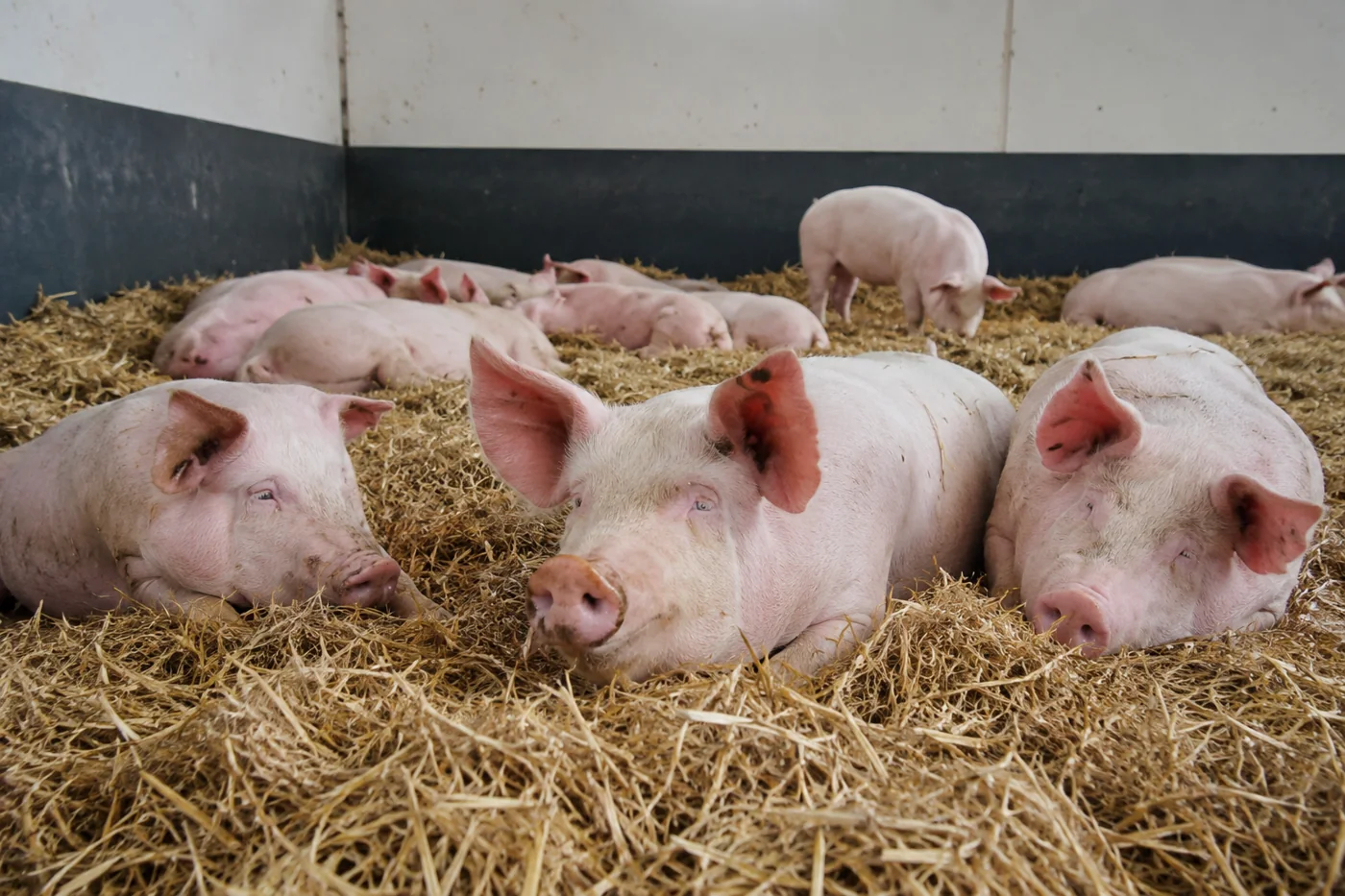
Animal-based measures
That is the whole point of an animal-based measure. EFSA's 2022 opinion on pig welfare puts these outcome measures at the centre: tail, ear and skin lesions, lameness, poor-doers, body soiling, mortality. You read them off the pig, not off the building spec. A resource audit tells you the risk the pen carries; only the pig tells you the result.
A number needs a threshold
A raw number is not a verdict. '3% lame' means nothing until you know what 3% represents. So KTBL and the Friedrich-Loeffler-Institut did the harder half of the job - for weaners and fatteners they set, for each indicator, a target value you aim for and an alarm value that marks an acute problem. Now a result lands in a zone: green, early-warning, or alarm. Lameness alarms earliest of all, at just 3% of animals. Tail lesions carry a high alarm, 10%, because an outbreak spreads fast - which is exactly why you watch the slope, not wait for the line.
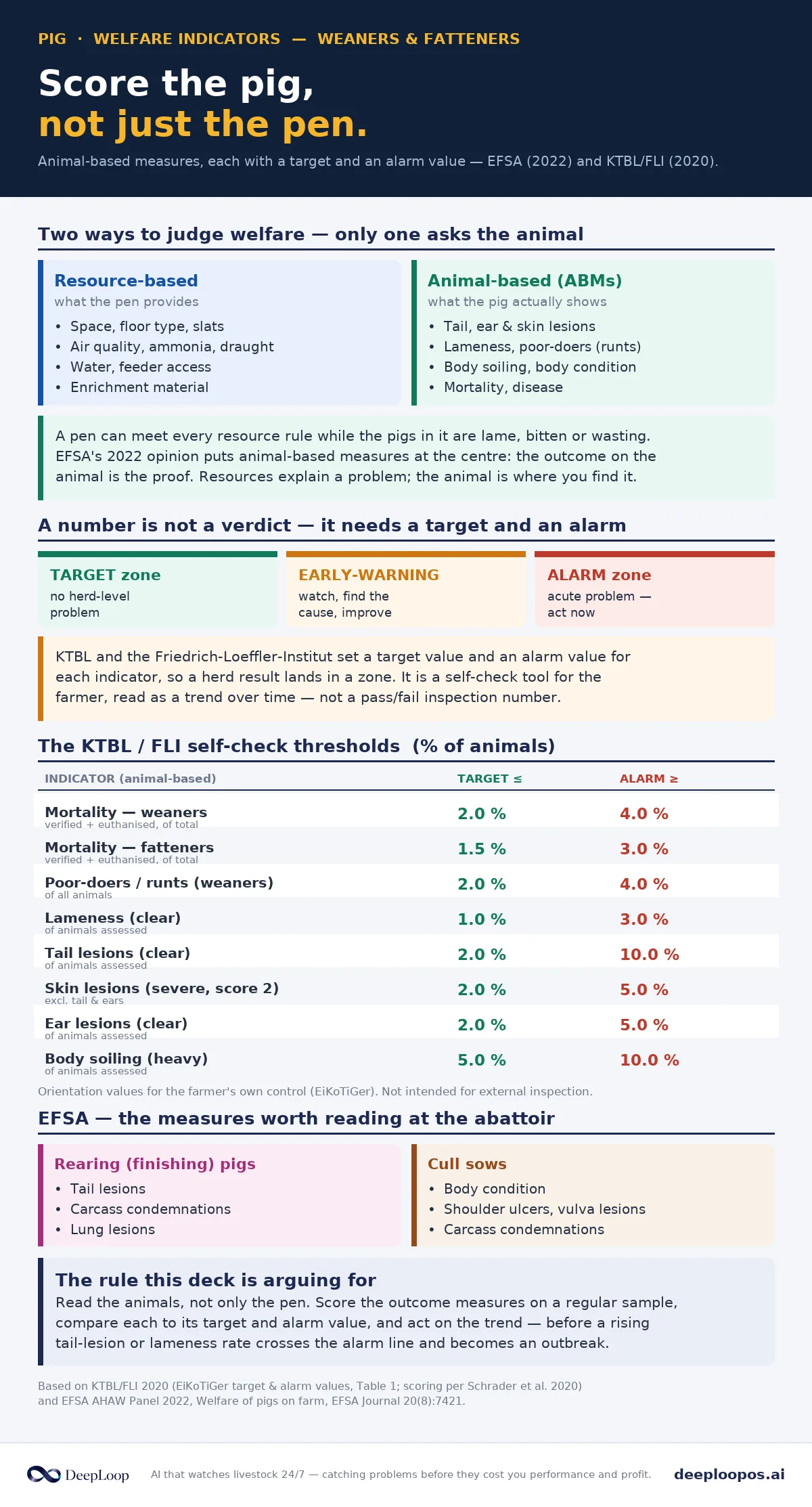
Resource-based vs animal-based welfare measures, redrawn - the outcome measures EFSA places at the centre.
Same barn, next week, different score
A welfare audit gives you a number for a farm - but what if the same farm, scored a fortnight later, would earn a different one? A Spanish team ran the full Welfare Quality protocol every two weeks through one entire fattening cycle, in two buildings of the same farm, with the same two trained assessors. Nothing about the farm changed on assessment day; only the point in the cycle did. The score moved anyway - evidence that a twice-a-year snapshot can miss where a unit really sits.
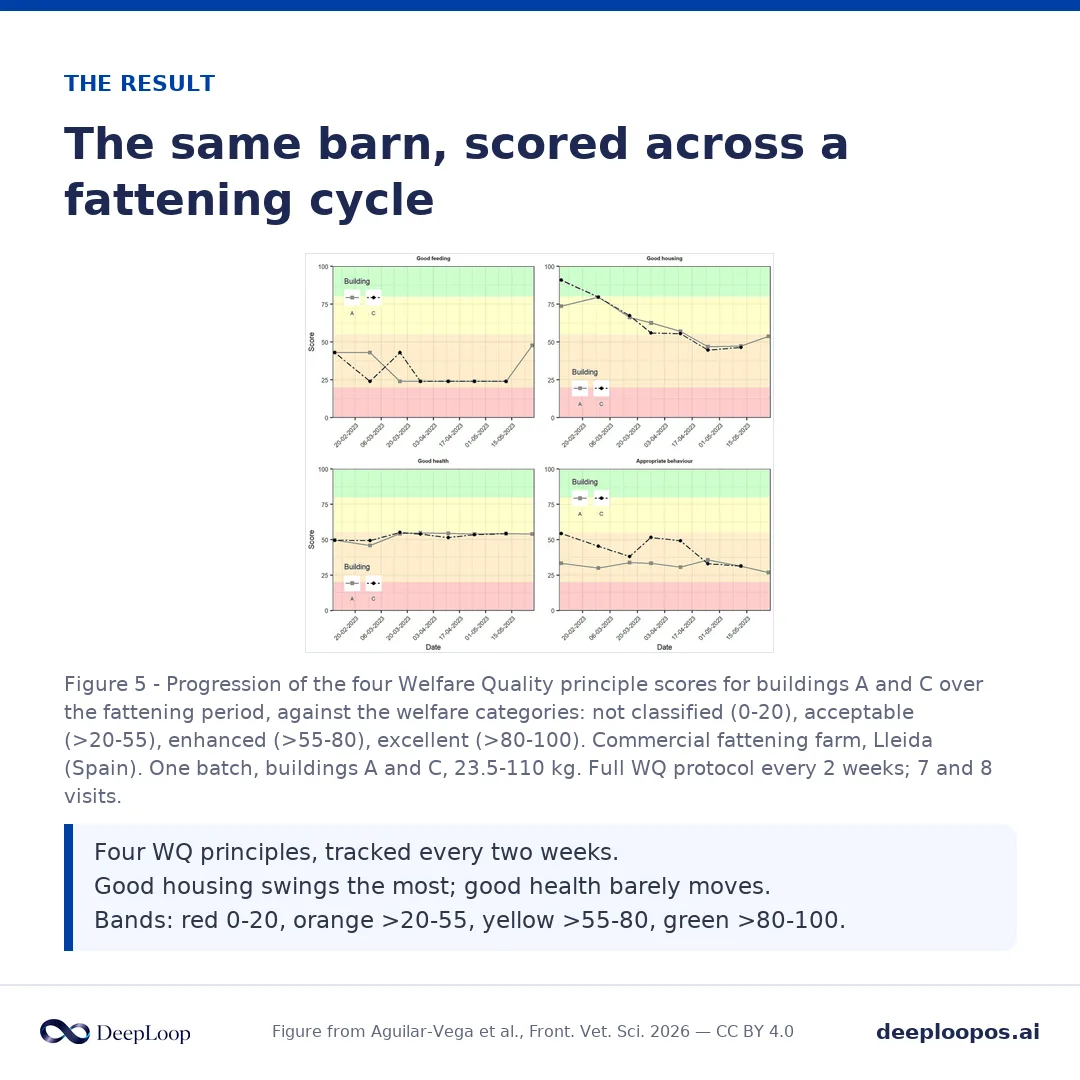
From the Spanish study - the same farm scored differently depending only on where in the fattening cycle the audit fell.
Watch the slope, not the line
The target/alarm framework works best as a trend, not a spot check. Tail biting is a whole-system alarm because it spreads fast; catching the slope before it crosses the alarm line is the difference between a management note and an outbreak. And every measure quietly assumes someone is reading the pigs on more than a twice-a-year sample.
Where this is heading
DeepLoop is working on the part the whole framework quietly assumes: that someone is actually reading those signs, continuously, not on a twice-a-year sample. Score the pig - but score it often enough to see the slope.