DeepLoop Team · 2026-08-17
Pig Heating: Why the Set Point Is Not the Answer
Two pigs, same weight, same building, same day - and their correct temperature can be 5 °C apart. The only difference is that one is eating properly and the other is not. A pig that eats generates its own heat, which is why the set point is never the whole answer.
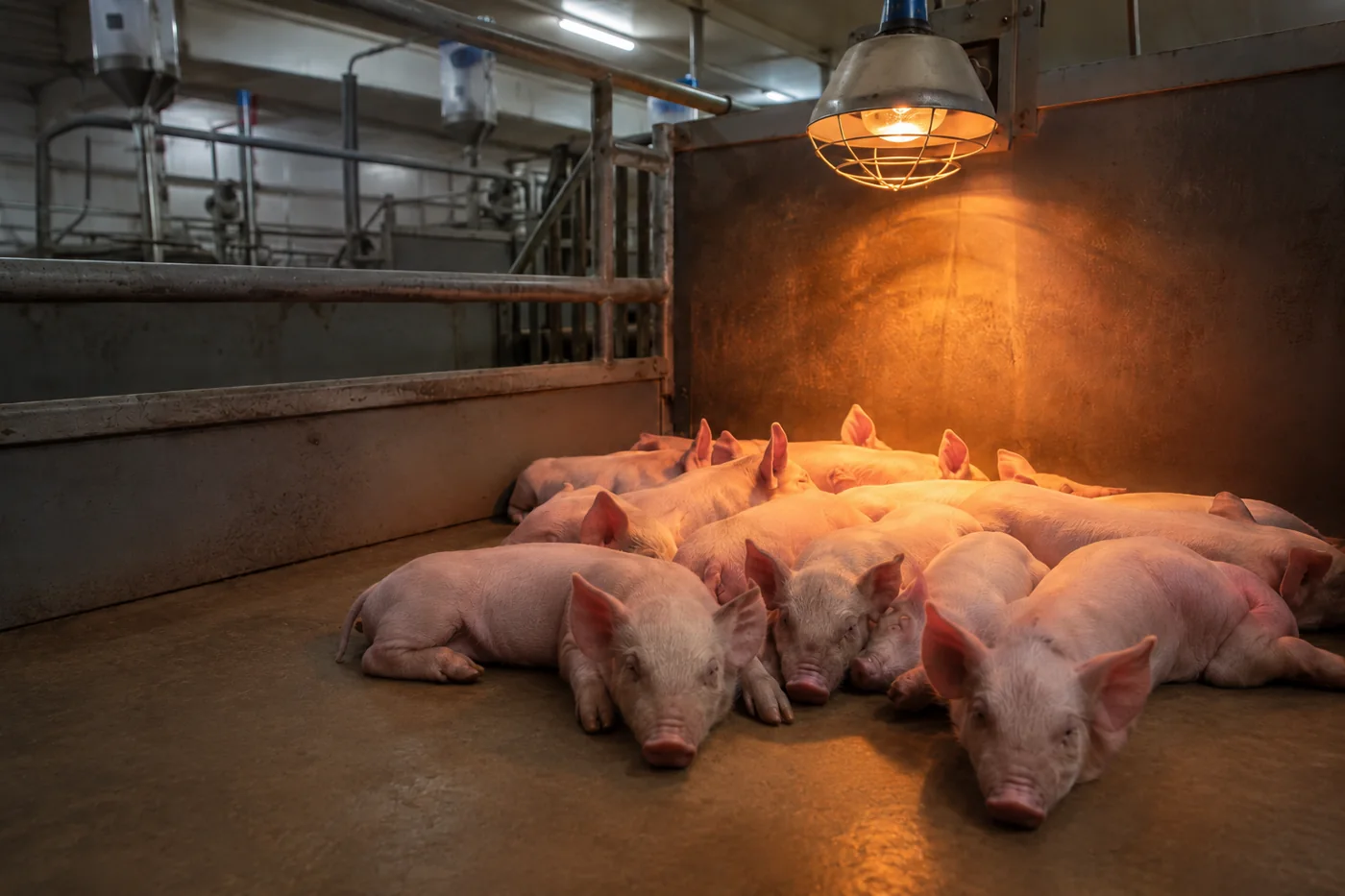
A pig that eats heats itself
MAFF's classic table, republished by AHDB, puts the lower critical temperature of a 5 kg piglet at 30 °C on restricted intake and 25 °C on full intake. At 80 kg it is 15 °C against 11 °C. In sows the gap reaches 14 °C. Feed intake is a heat source - the well-fed pig runs warmer from the inside, so the temperature it needs from the room is lower. The number on the controller means nothing without knowing which pig is eating.
The pen that needs heat most is invisible
Which means the pen that most needs extra heat is the pen that has just gone off feed - and nothing on the controller will tell you that happened. AHDB says it plainly about every sensor in a pig building: they are 'rarely providing an exact temperature reading', and the stockperson 'must use their judgement as to how the pigs react'. The room can hold set point perfectly all week while the pigs in it are 5 °C from where they should be.
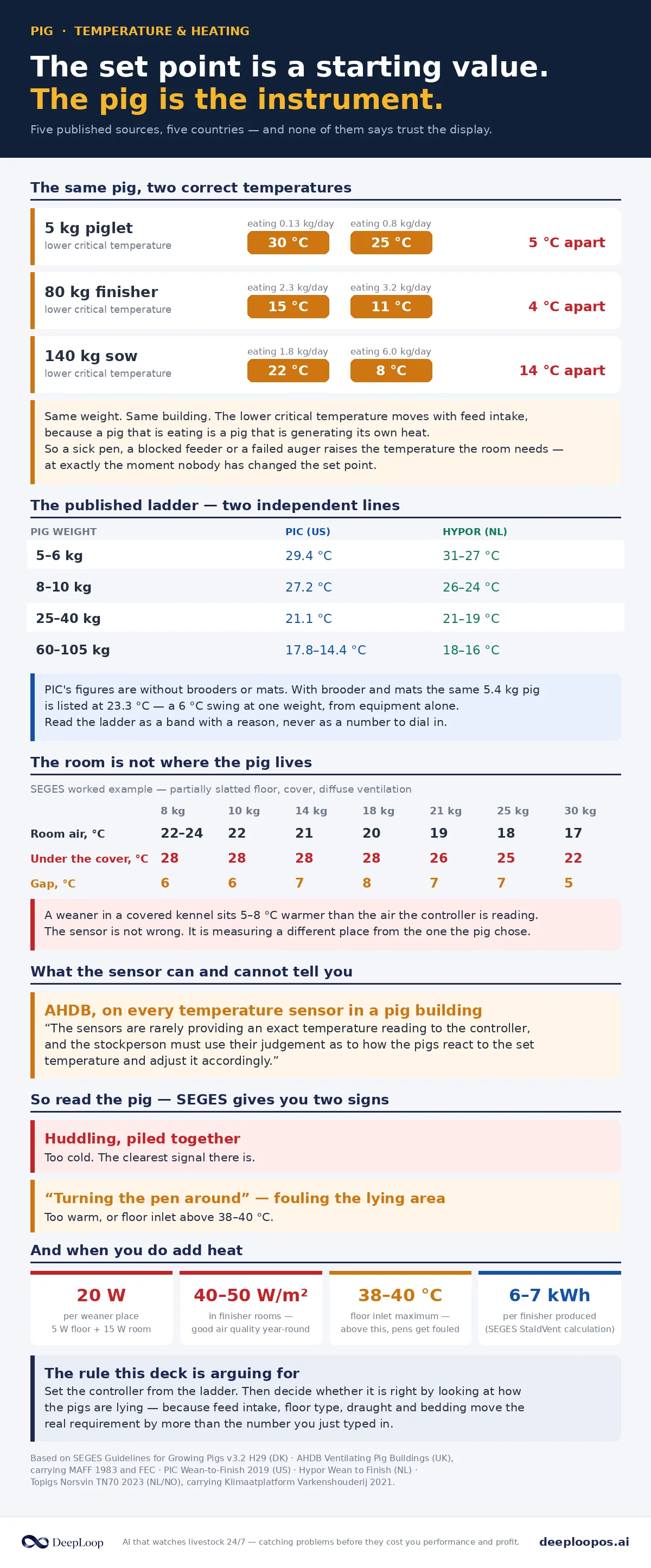
Lower critical temperature by weight and feed level - the published ladder from PIC and Hypor, redrawn.
What Purdue's pigs chose
Purdue researchers built a corridor with a temperature gradient - five zones from 18 to 30 °C, feed and water in every zone - and let weaned pigs choose where to lie. Alone, a pig picked 30.2 °C. Put two or four together and they picked around 20 °C: a 10 °C difference from company alone. And every preference the grouped pigs showed fell below the standard 26-32 °C recommendation. The authors' explanation: that guidance rests on work over 30 years old, and three decades of selection for lean growth have produced an animal that generates more of its own heat than the pig those tables were written for. Nothing was attached to an animal - the whole result comes from watching where pigs chose to lie.
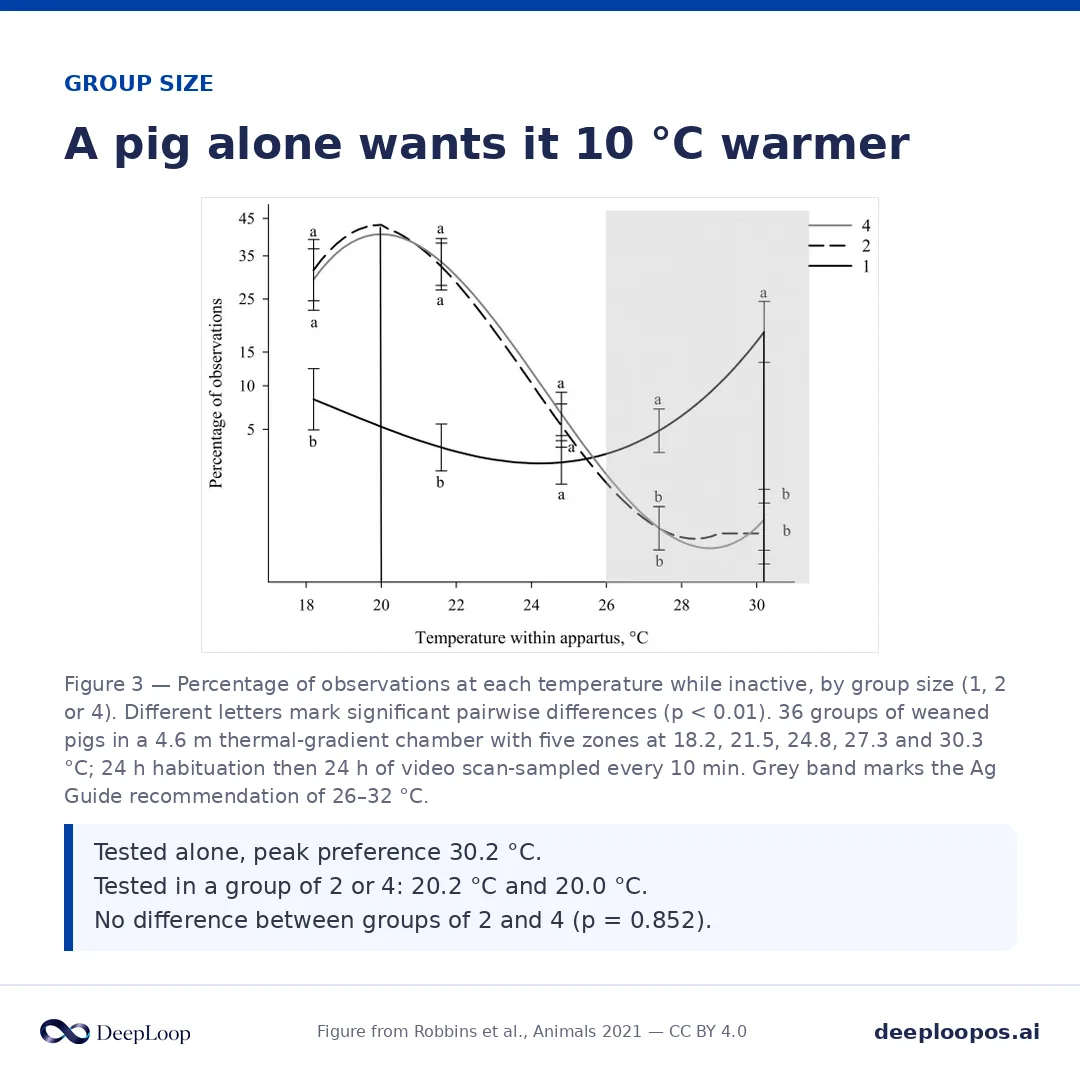
From the Purdue thermal-gradient study - grouped weaned pigs chose temperatures well below the standard recommendation.
Room air is not pig surface
There is a 5-8 °C gap between the room air the controller reads and the surface the pigs actually chose to lie on. A draught erases it; a bale of straw restores it. The room-air number and the pig-experience number are two different things, and heating decisions made on the first while ignoring the second keep pigs cold in a house that reads warm.
Where this is heading
The controller holds a number; the pigs hold the truth, and the two drift apart the moment a pen goes off feed. DeepLoop is working on the part that does not scale - keeping that judgement on the pigs continuously, not only when someone is standing in the doorway.