DeepLoop Team · 2026-11-09
Pig Health and Biosecurity: Keep the Virus at the Gate
Biosecurity is two jobs, and most farms run one well and the other by habit. External keeps pathogens off the farm - siting, downtime, quarantine, transport. Internal stops them spreading once inside - zones, cleaning, all-in-all-out.
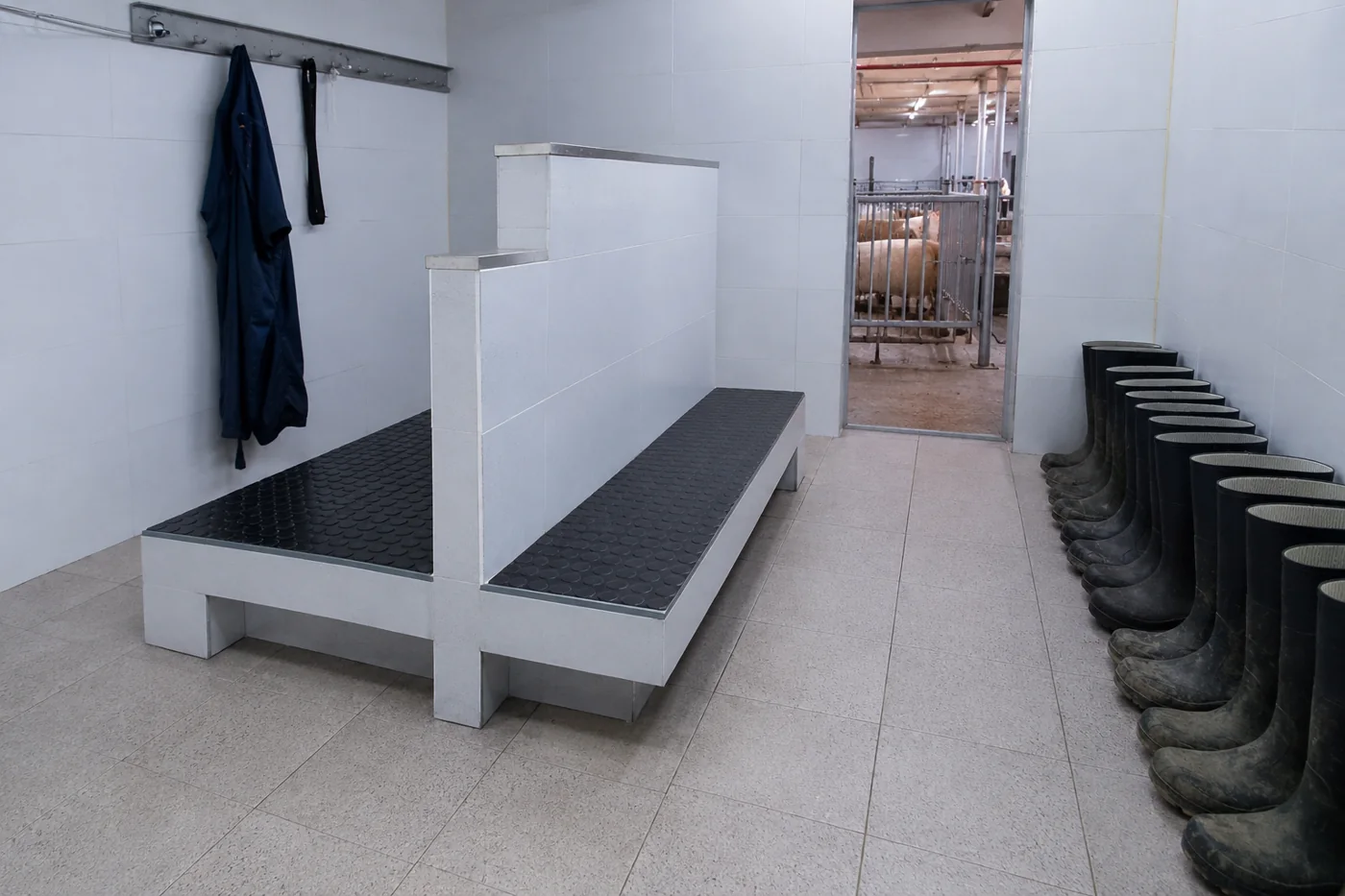
No vaccine means no second chance
African swine fever has no vaccine. You cannot treat your way out, so the whole game is keeping the dose that arrives at the pig as small as possible. External and internal biosecurity are the two halves of that - and running one well while the other coasts on habit leaves the door the virus actually uses wide open.
95% of disinfection is the cleaning
The number that surprises people: roughly 95% of what a disinfection achieves is the cleaning that comes first, not the chemical. Disinfectant only finishes a surface that is already visibly clean - it cannot rescue a dirty one. Two respected manuals disagree openly on the hard numbers: Hypor (Europe) asks for a 3-minute shower and 3-6 pig-free nights before entry; a Chinese ASF field manual asks for a 10-minute shower and stages isolation on site instead - home 24h, then 48h, then 24h, then 24h. Same goal, bought two different ways. The mistake is running half of one and half of the other.
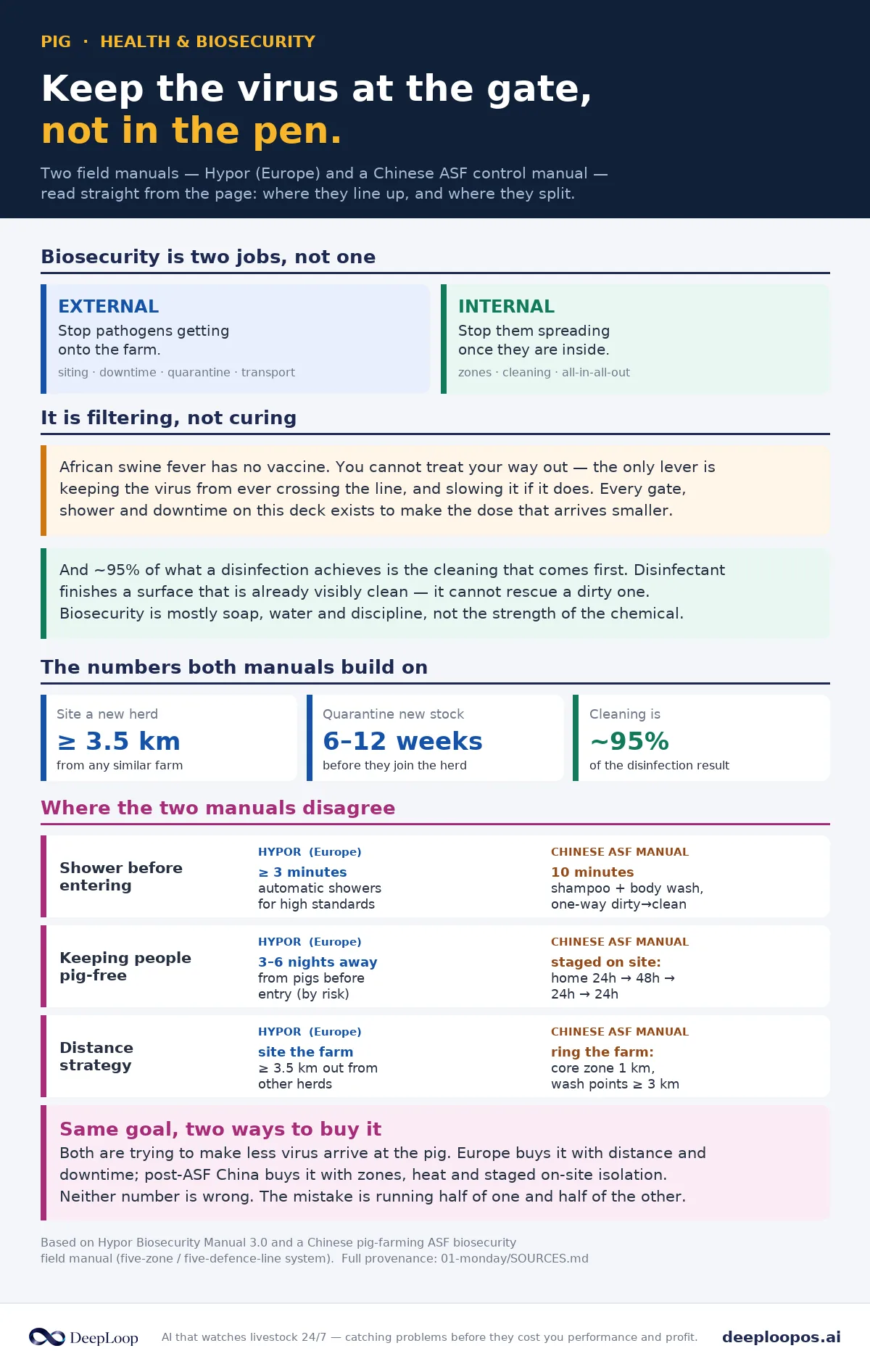
External vs internal biosecurity, with the downtime and quarantine tables, redrawn from the source manuals.
Knowing is not keeping it out
A team surveyed 471 small-scale pig farmers across Cambodia and the Lao PDR - the free-ranging, low-biosecurity systems ASF has hit hardest since 2019 - and measured two things separately: what farmers know, and what they actually do. The gap between them is the whole story. Knowledge was not the binding constraint; the practices that stop an outbreak were the ones that lapsed, even where the risk was understood.
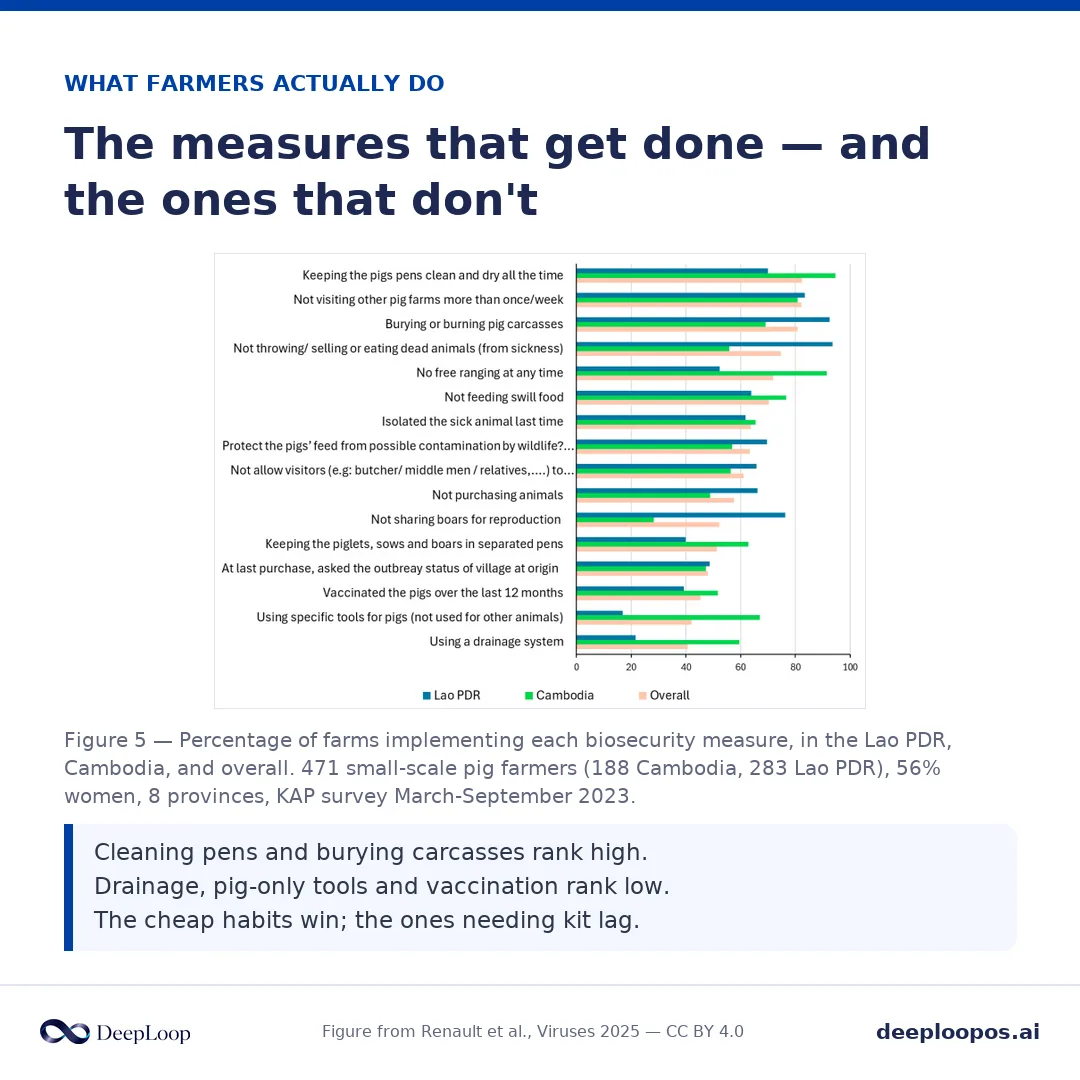
From the Cambodia/Lao survey - a wide gap between what farmers knew about ASF risk and what they actually practised.
The vectors that decide outbreaks
Biosecurity fails on the routes nobody times: the clean-then-disinfect sequence skipped under pressure, the downtime log kept on trust, and the vectors - flies, rodents, birds, water - that quietly carry the dose past the shower. A protocol that is real on paper but unverified in practice is the most common way the virus gets in.
Where this is heading
DeepLoop is working on the part biosecurity can't cover: the first sick pig still has to be seen, and most hours of the day nobody is in the barn to see it. Keeping the dose small is external; catching it early, if it gets in, is the internal job that needs continuous eyes.