DeepLoop Team · 2026-08-03
Layer Lighting Programmes: Why White and Brown Birds Differ
Light is the switch that starts lay - get the programme wrong and no amount of feed, ventilation or genetics recovers the flock. Two rules sit above everything, and the white and brown birds, even from one breeder, are not run the same way.
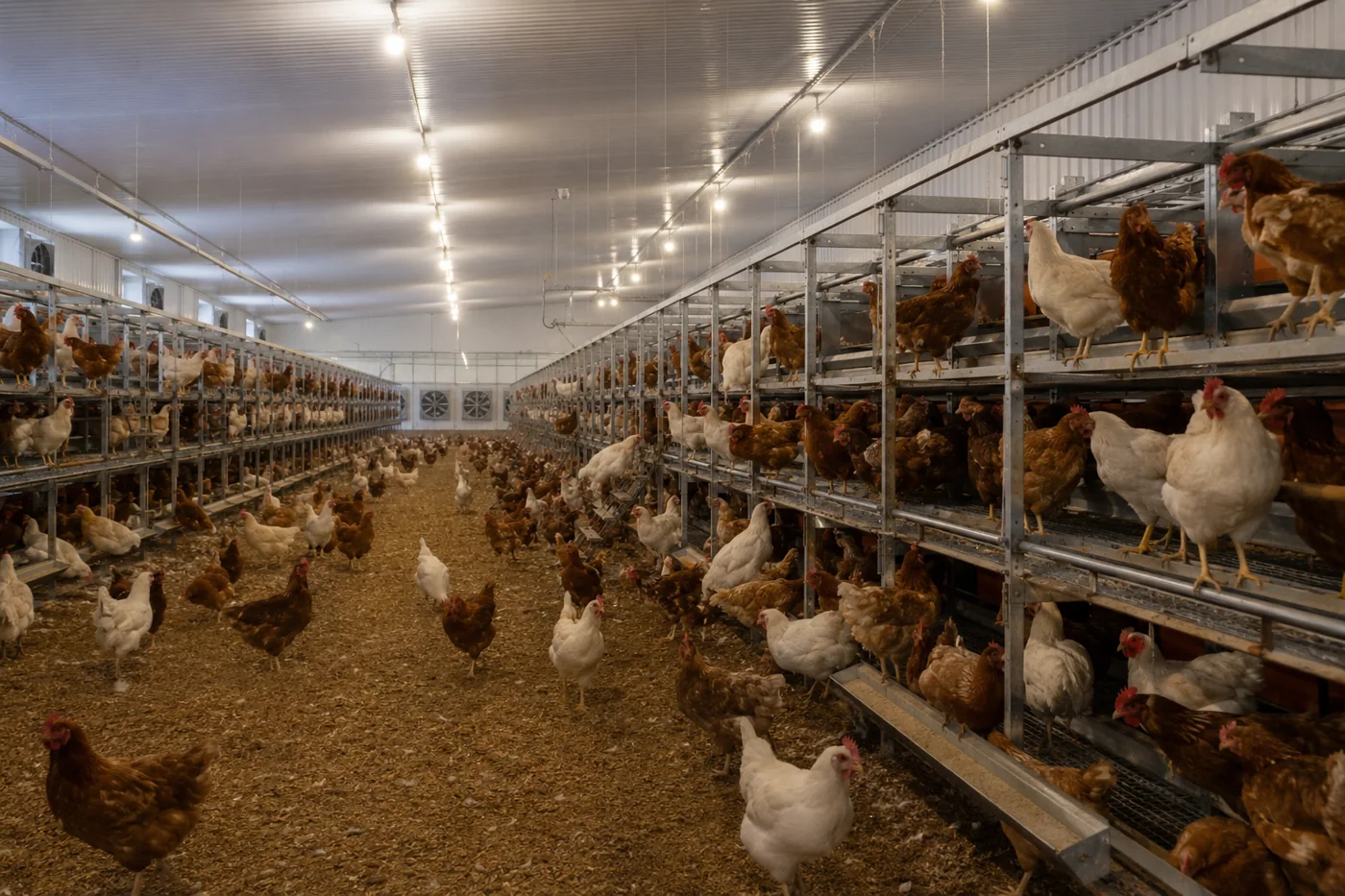
The two rules that sit above everything
Lohmann states both plainly, word for word: never increase hours of light during the rearing period until planned stimulation starts, and never decrease hours of light during the production period. Break either and you are working against the bird's own biology. A third principle on the same page: natural daylight changes the picture - open or brown-out houses need a tailored programme, not the windowless-house table.
Same breeder, two different programmes
What surprises people is that the white bird and the brown bird are not run the same way. LSL-Lite and Brown-Classic come from the same breeder, and their programmes differ at both ends. The brown bird steps down more slowly out of the brooder. At stimulation it is brought into lay on 5-7 lux while the white bird gets 10-20 - roughly a third of the light for the same step-up in hours. And they finish apart: 15-16 hours for the brown against 14 for the white. Between those two ends sits a stretch where breed makes no difference at all - weeks 7 to 16, nine hours, 4-6 lux, identical for both.
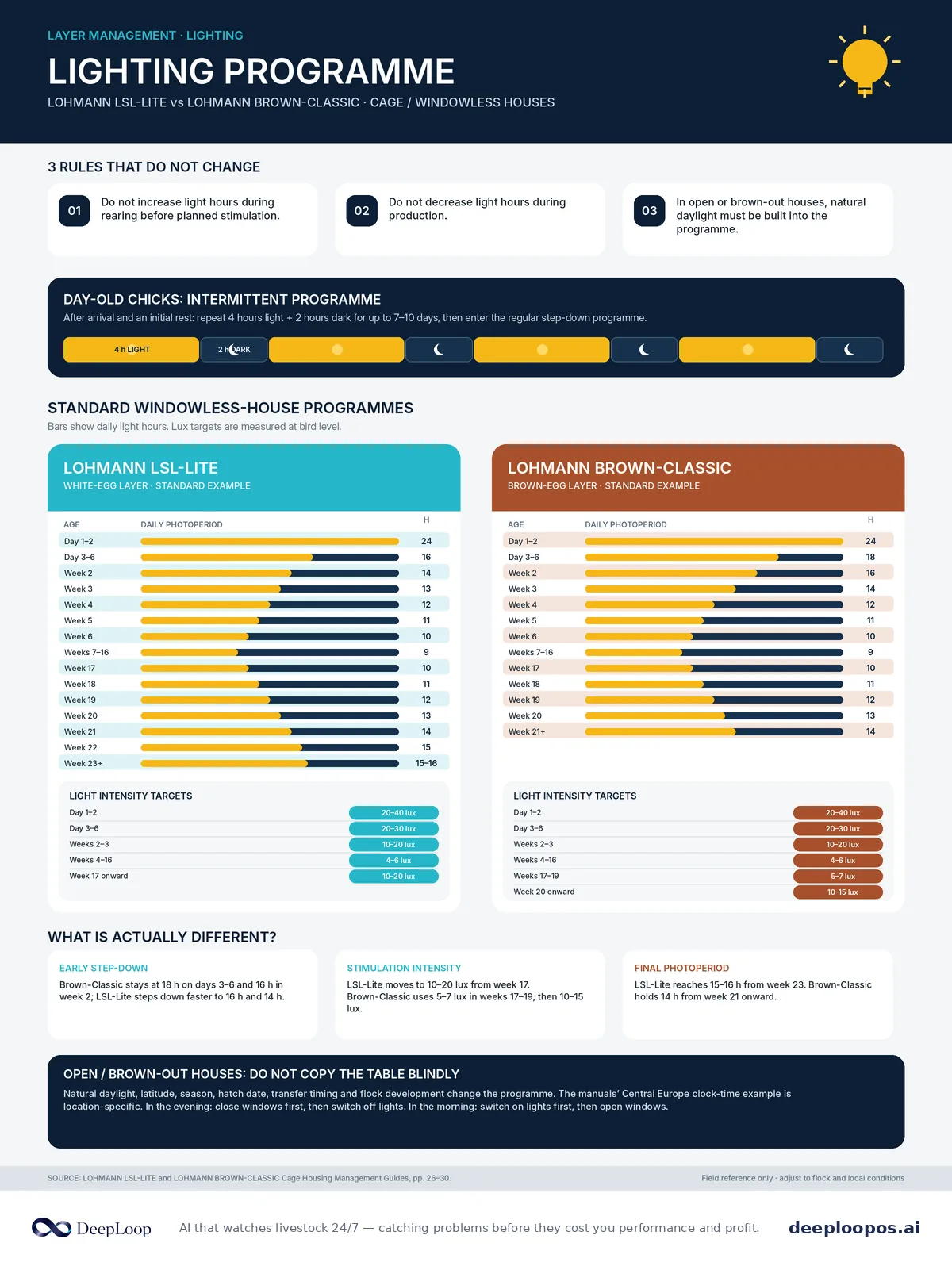
LSL-Lite (white) and Brown-Classic (brown) lighting programmes side by side - hours and lux by age, redrawn from Lohmann's Cage Management guides.
What the 2025 research adds on shell quality
A 2025 study in Animals (Clark et al., CC BY 4.0) ran Hy-Line W36 hens from 20 to 70 weeks under three light-day patterns: the standard 16 hours light with 8 hours continuous darkness (C), against two intermittent schedules that split the dark period with a short midnight light break (W1 and W2). The intermittent birds had higher daily egg production at peak and late lay, fewer damaged eggs in mid and late lay, and - the headline - eggshell strength that held constant with age instead of declining. The premise: shell is laid down at night, and a midnight feed access gives the hen dietary calcium exactly when she needs it.
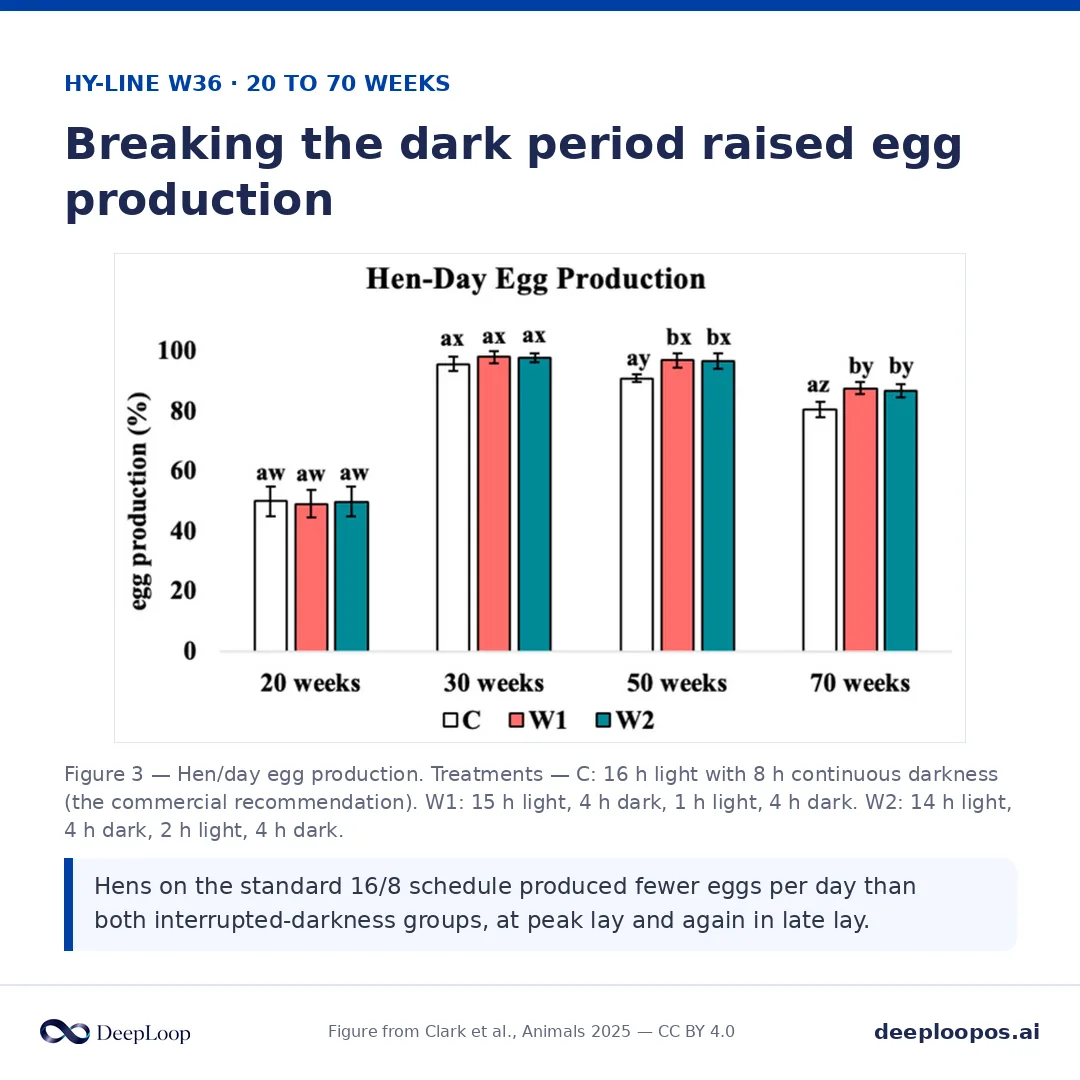
From Clark et al., Animals 2025 (CC BY 4.0) - intermittent light-day schedules held eggshell quality where continuous darkness let it decline.
The first ten days, and the shared middle
Lohmann advises an intermittent 4-hours-on / 2-hours-off schedule for the first ten days in the brooder, before the programme settles into its step-down. And for all the divergence at the ends, weeks 7 to 16 are identical for both birds - nine hours, 4-6 lux. The programme only works if it is actually held: the value is in the column for the bird you are running, checked against what your controller is really doing.
Where this is heading
A lighting programme is a promise made at the controller and kept - or not - through every night the flock is unwatched. DeepLoop is building AI monitoring that watches what the flock does between checks, so the programme set on paper is the one the birds actually live.