DeepLoop Team · 2026-08-24
Layer Feeding: A Hen Eats Grams, Not a Percentage
A layer needs a fixed amount of protein and calcium each day - grams, not percent. The percentage on the label is just that requirement divided by how much she actually eats, and she does not eat the same every day.
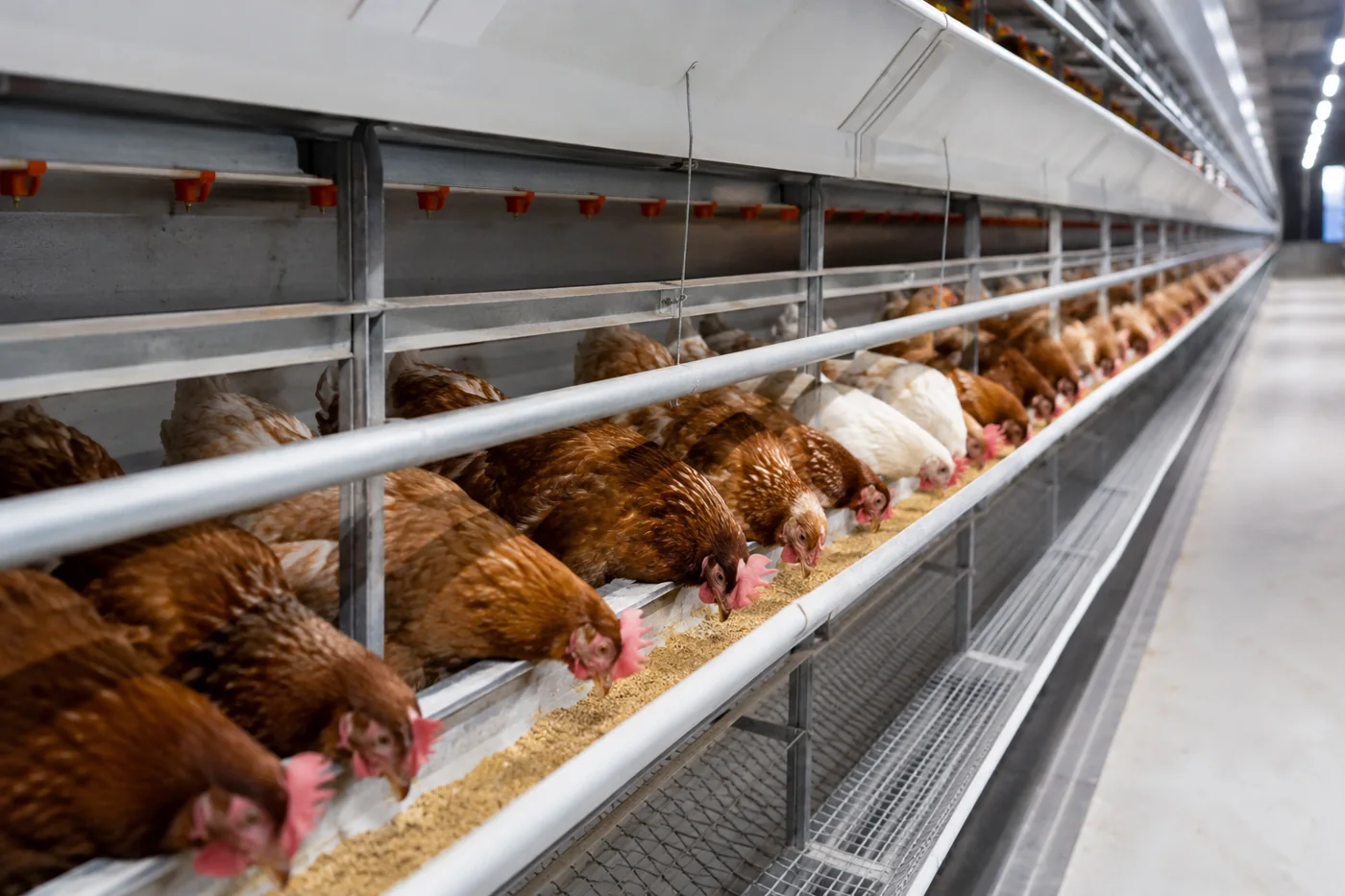
The label percentage is the wrong thing to hold constant
Lohmann's own Phase 1 table makes it concrete: an LSL-Lite hen needs 18.0 g of protein a day. Feed her 105 g and that is 17.1% protein in the bag; feed her 120 g and the identical requirement is 15.0%. Same bird, same day, over two percentage points apart - on nothing but intake. Hold the percentage constant and you are chasing the wrong number; the grams are what the hen actually needs.
Two dials turned against each other
The two things that matter most move in opposite directions as she ages, and neither is 'reduce the feed'. Across the three phases her protein requirement falls - 18.0 to 17.5 to 16.8 g/day - while her calcium requirement rises: 4.10 to 4.40 to 4.50 g/day. An old hen laying a large egg on a tiring shell gland needs less protein and more calcium than she did at peak. Phase feeding is not one dial turned down; it is two dials turned against each other.
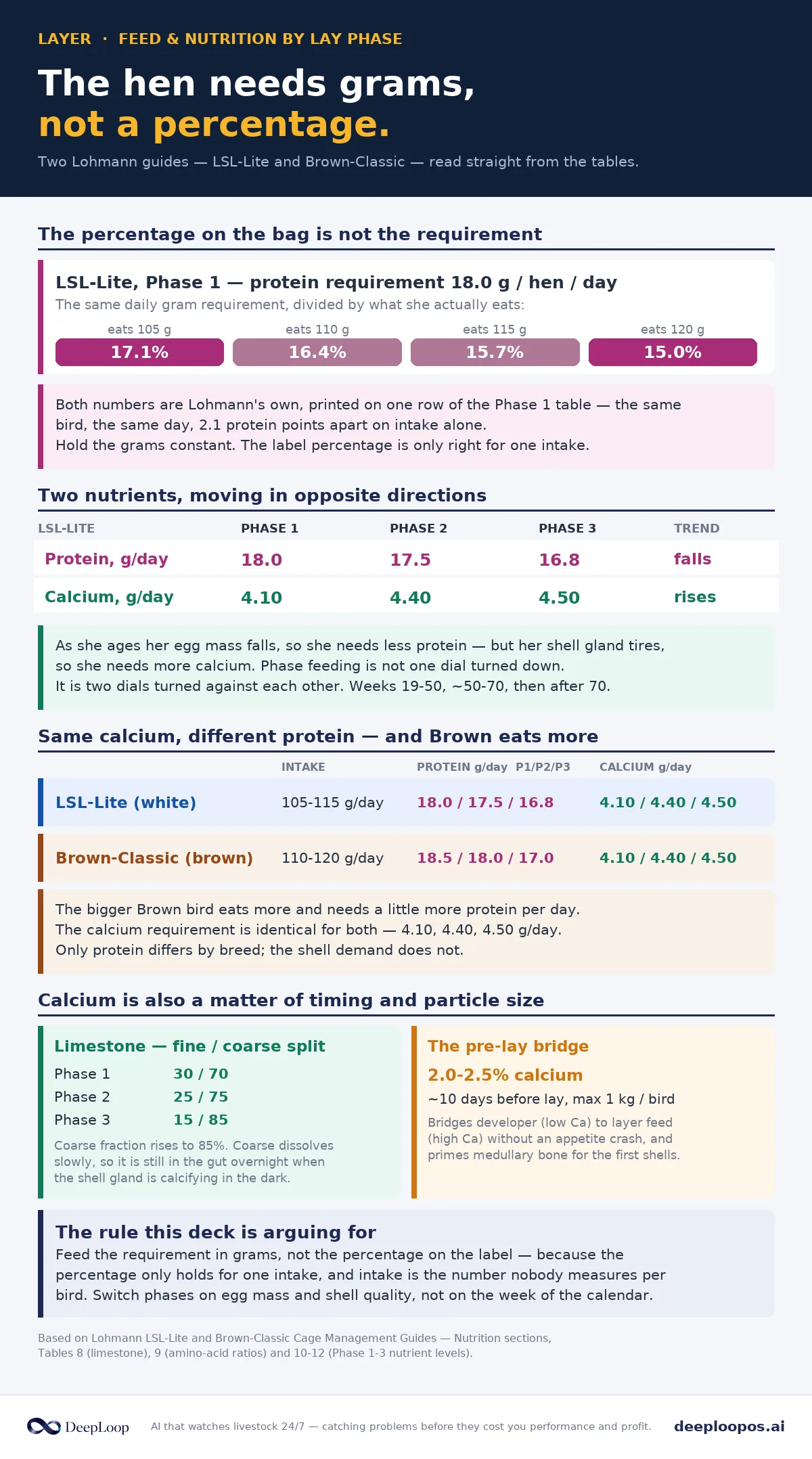
LSL-Lite and Brown-Classic phase-feeding requirements in grams per day - protein falling, calcium rising, redrawn from Lohmann.
Same calcium, better shell - just later in the day
A hen builds her shell mostly overnight, hours after she last ate. A Brazilian team asked what happens if you give most of the calcium in the afternoon, right before the shell gland needs it. They split the day: morning feed carried more protein and energy and less calcium, afternoon feed the reverse - same total, moved in time. Egg production, weight and mass did not change at all (P = 0.250). Shell breaking strength rose from 2.34 to 2.66 kgf and Haugh units from 82.3 to 85.6. Not more calcium - better-timed calcium.
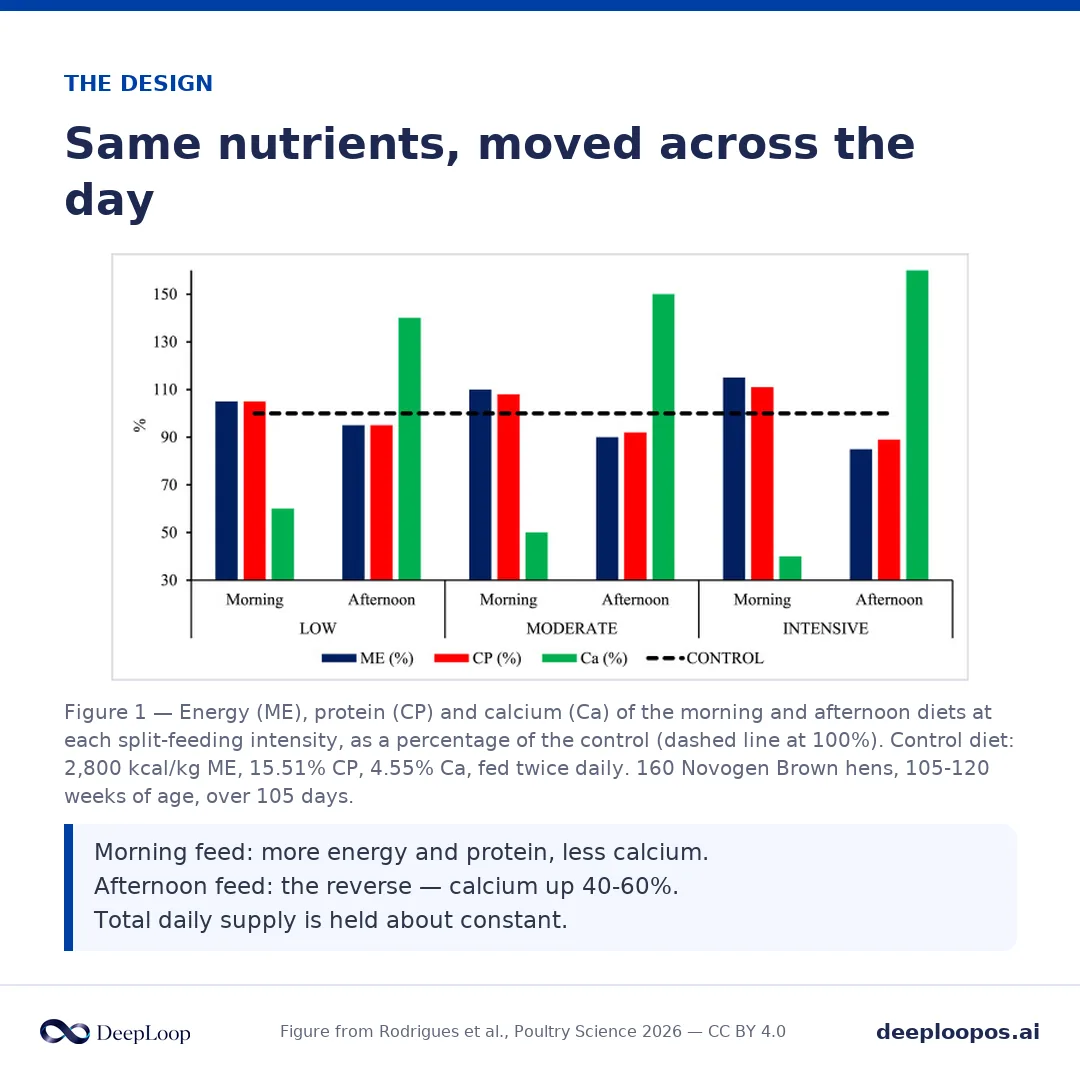
From the split-feeding study - shell strength and Haugh units improved on the temporal distribution of nutrients, not a higher total calcium intake.
The pre-lay bridge
The other place phase feeding is won or lost is the switch itself. A pullet dropped straight into full-calcium layer feed before she is laying can crash; the fine-to-coarse limestone shift and a pre-lay bridge diet ease her onto the calcium she will need for the overnight shell. Move by the birds, not only the calendar - the phase change is a biological event, not a date.
Where this is heading
Every gram in the table is divided by one number nobody measures per bird - how much each hen actually ate. DeepLoop is working on exactly that: turning flock-average feed into a per-bird signal, so the phase you feed matches the hen in front of you.