DeepLoop Team · 2026-10-26
Layer Climate and Ventilation: The Feed Table Has a Temperature In It
Every nutrient level Lohmann prints for a laying hen is calculated for one house temperature: 20 °C. Change the temperature and you change what she eats - and the percentage on the bag is only the daily gram requirement divided by intake.
20 °C is baked into the feed
At 20 °C an LSL-Lite hen is expected to eat 105-115 g/day, a Brown-Classic 110-120. Let the house run hot and she eats less of the identical feed - so the same bag now delivers fewer grams of protein and calcium per bird. The label never changed; the egg still shrinks. The feed programme and the house temperature are one system, not two.
No fan number - only the targets it must hold
The interesting thing about the guide is what it does NOT contain: a ventilation rate. No m³/hour per hen anywhere. Instead it prints the targets ventilation has to hold - 18-20 °C at bird level, 60-70% relative humidity, and the Table 2 gas ceilings: CO₂ under 0.3%, ammonia under 20 ppm, CO under 40 ppm, H₂S under 5 ppm. Ventilation is not a fan number to hit; it is whatever keeps the house inside those.
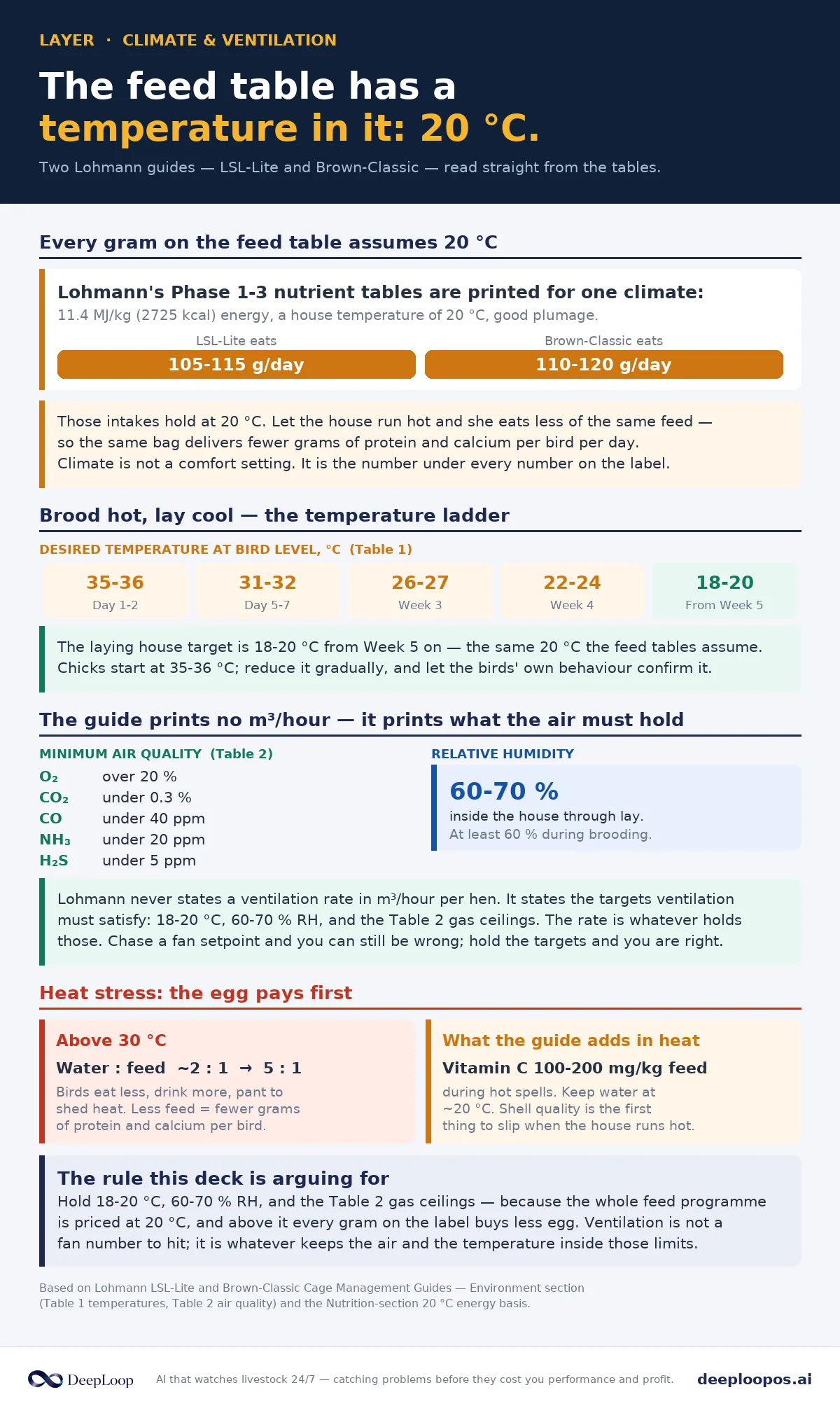
The brood-to-lay temperature ladder and the 20 °C feed baseline, redrawn from Lohmann.
A hot hen eats less, and the egg pays
A team at Ohio State measured it in a cage-free house: one group held at a thermoneutral 22 °C, another cycled to 35 °C for 12 hours a day, for 8 weeks - same feed, same Hy-Line W-36 hens, only the temperature moved. Heat stress cut feed intake and, through it, egg output and quality, exactly as Monday's argument predicts: the bag did not change, but the grams reaching the bird did.
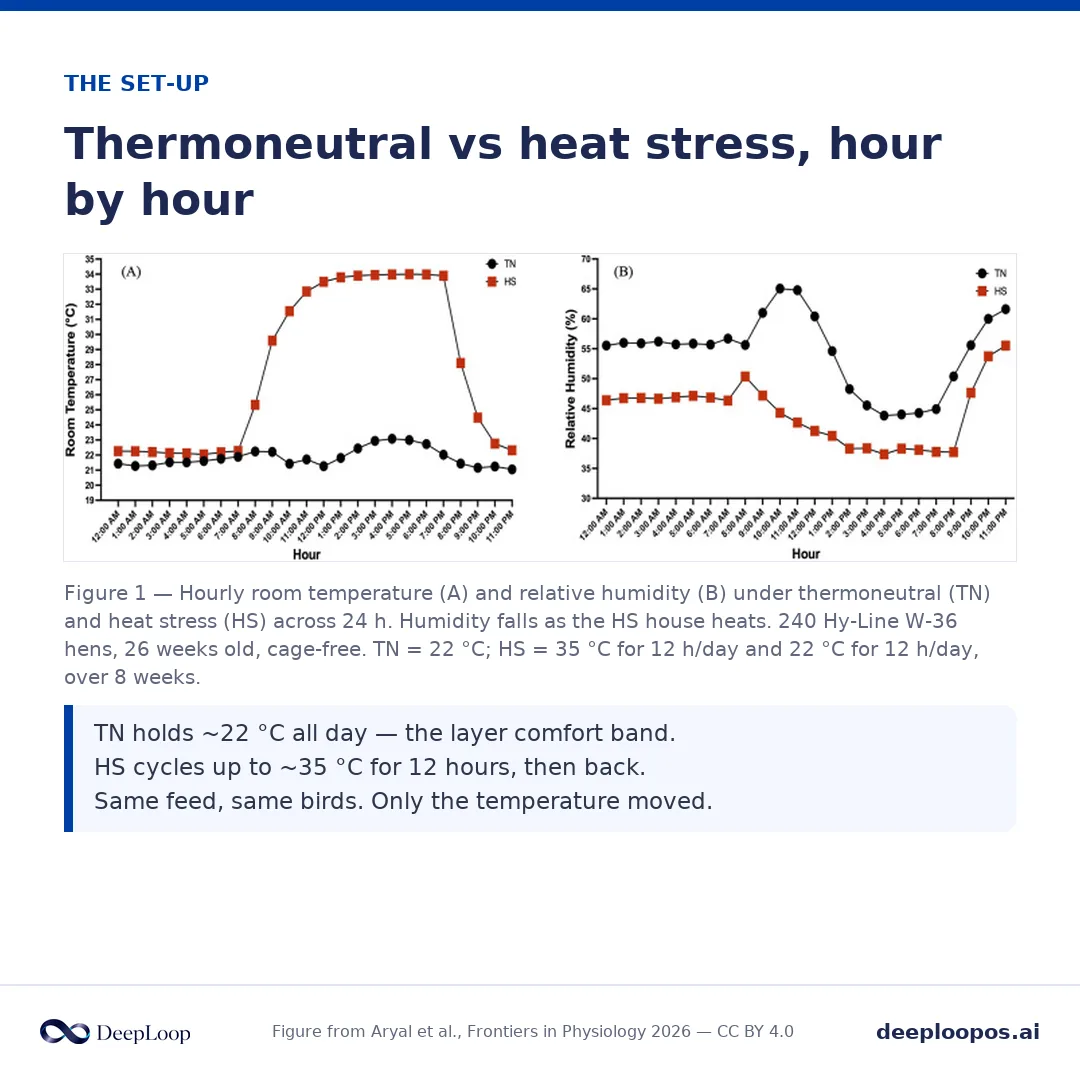
From the Ohio State study - cycling hens to 35 °C cut feed intake and egg output against a 22 °C thermoneutral control.
One probe speaks for thousands
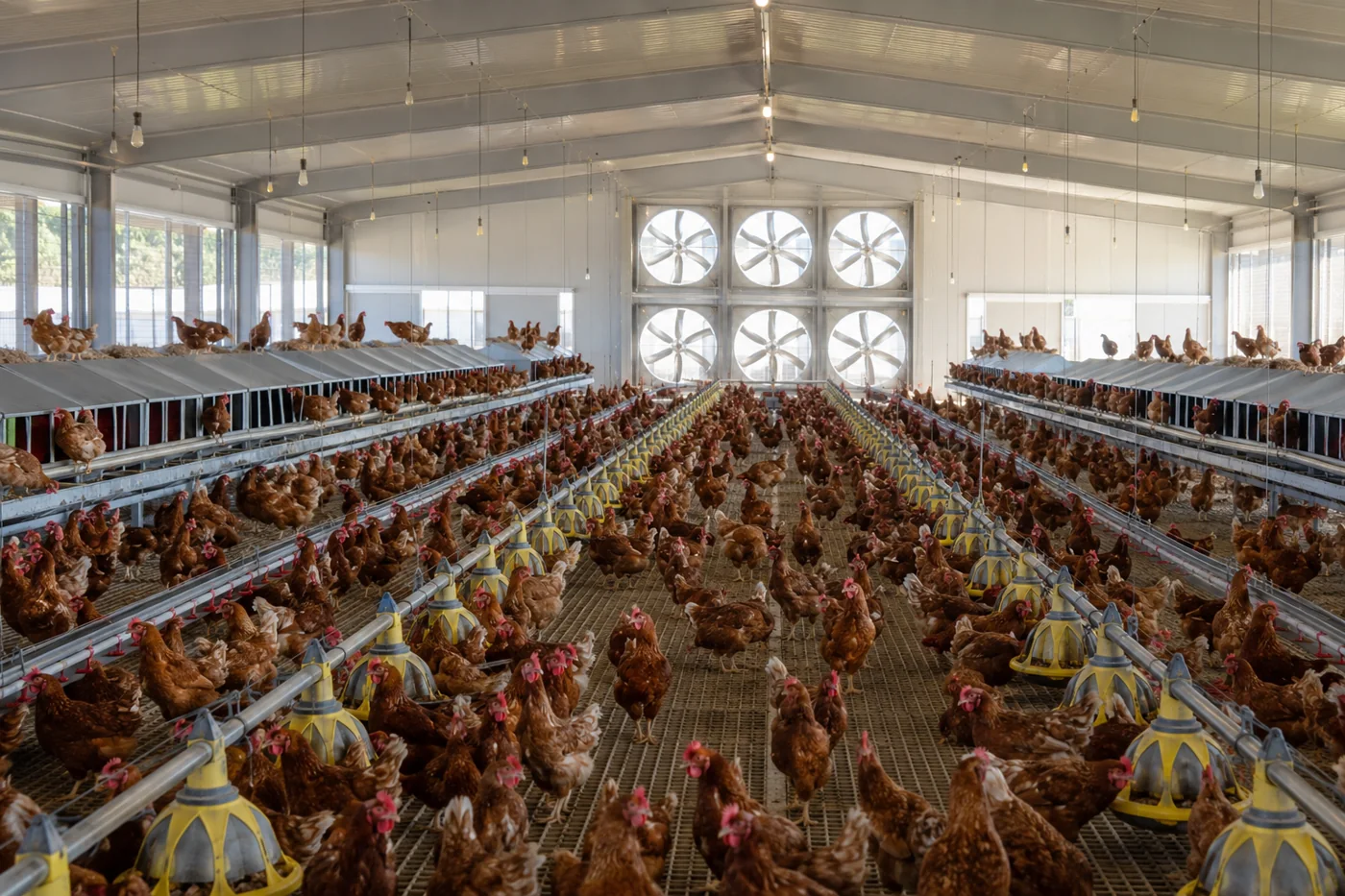
A limit breached for two hours a day is still breached, and a single probe in the middle of the house speaks for thousands of birds it is nowhere near. The air and temperature the hens actually experience vary by zone and by hour; the reading those targets need is where the birds are, continuously, not one number for the whole house.
Where this is heading
DeepLoop is working on the reading those targets actually need - the air and the temperature where the birds are, continuously, not on one probe in the middle of the house. Ventilation exists to hold the limits; holding them means measuring where they are broken.