DeepLoop Team · 2026-08-10
Broiler Brooding: Why It's Decided Before the Chicks Arrive
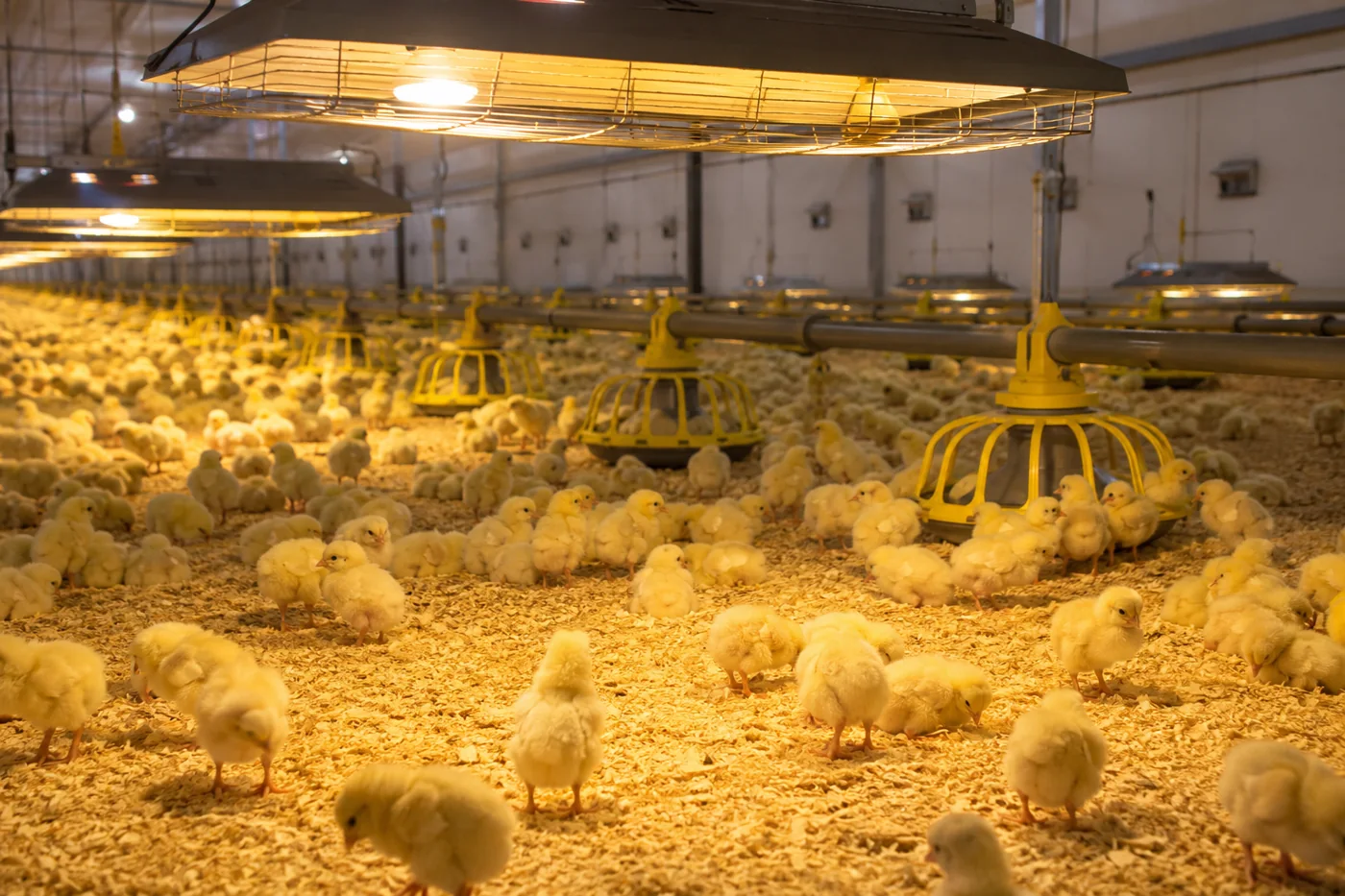
A day-old chick sits at 39.4-40.5 °C internally, warmer than any floor we preheat, and cannot yet hold that temperature on its own. The floor is not warming the chick - it is draining it. Cobb notes birds lose significant heat through their feet for the first two weeks, which is why preheating is a floor job, not an air job, and why brooding is decided before the chicks ever arrive.
Preheat the floor, not the air
Both breeders say it in numbers. Cobb: litter at 30-32 °C with forced air, 40.5 °C directly under a radiant stove, the concrete below the litter at 28-30 °C, CO₂ under 3,000 ppm before the birds land. Ross: 30 °C whole-house at chick height, 32 °C at the brooder edge for spot brooding, 60-70% relative humidity. Start heating 24-48 hours ahead, depending on the system and the season. Preheating the floor shrinks the gradient the chick loses heat across; warm air alone does not.
Uniformity is the whole point
The part that gets skipped is measurement. Cobb asks for a litter and concrete reading every 6 metres down the house, in three rows across it. One quick reading at placement tells you almost nothing about uniformity - and uniformity is the whole point. A house that averages the right temperature can still have cold corners where chicks pile, chill, and never catch up. The map matters more than the single number.
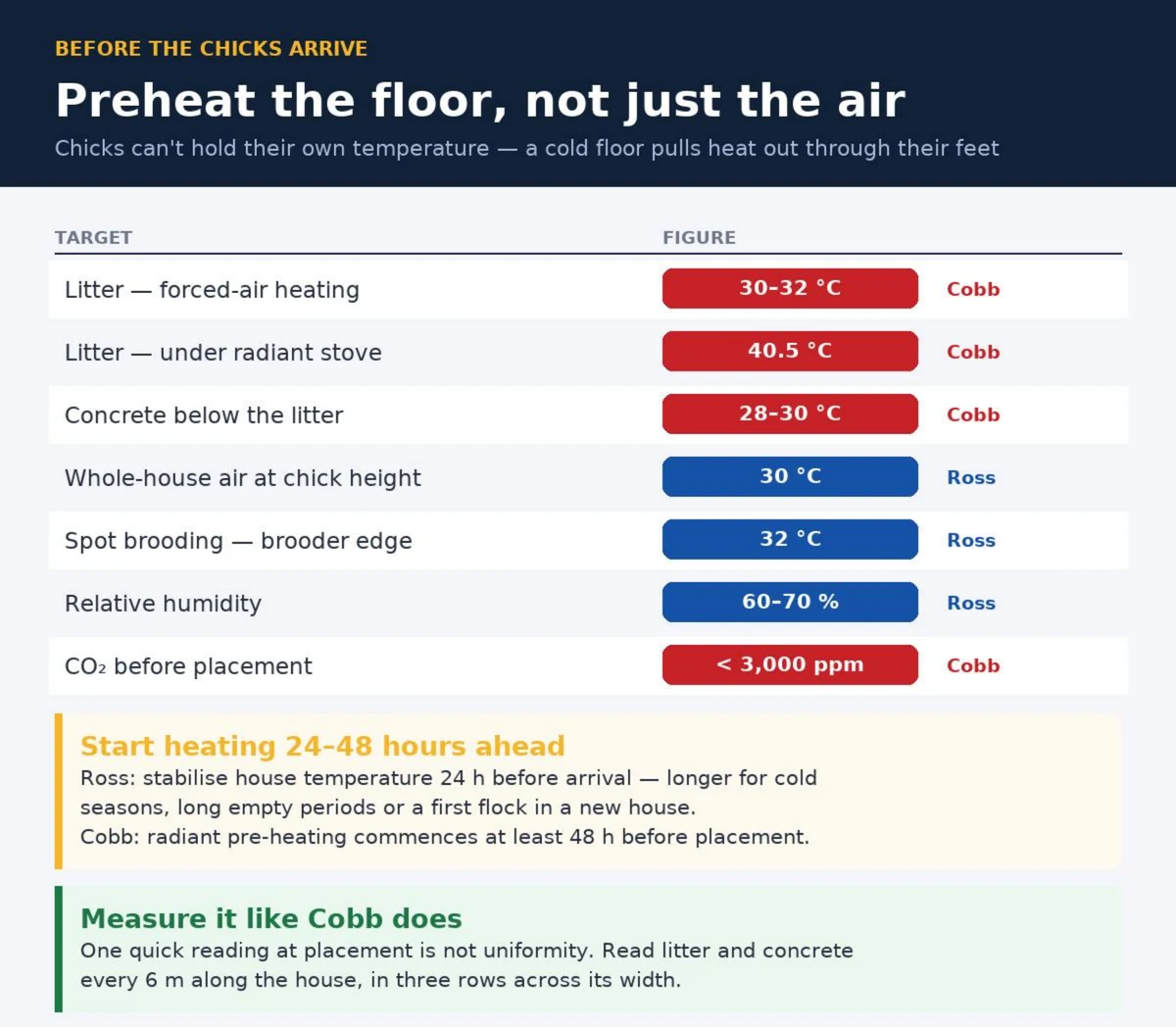
Cobb and Ross pre-placement brooding targets side by side - litter, concrete and air, redrawn from both management guides.
What the 2026 research shows about day one
A 2026 study in Veterinary World (Noisamran et al., CC BY 4.0) examined 296 broiler flocks and linked early-life conditions to leg health. Two findings stand out: the highest day-1 temperature and the day-14 light intensity both tracked with the distribution of lameness across flocks. It puts numbers to what stockpeople see - that the first days set outcomes measured weeks later, and that brooding decisions echo far past the brooding window.
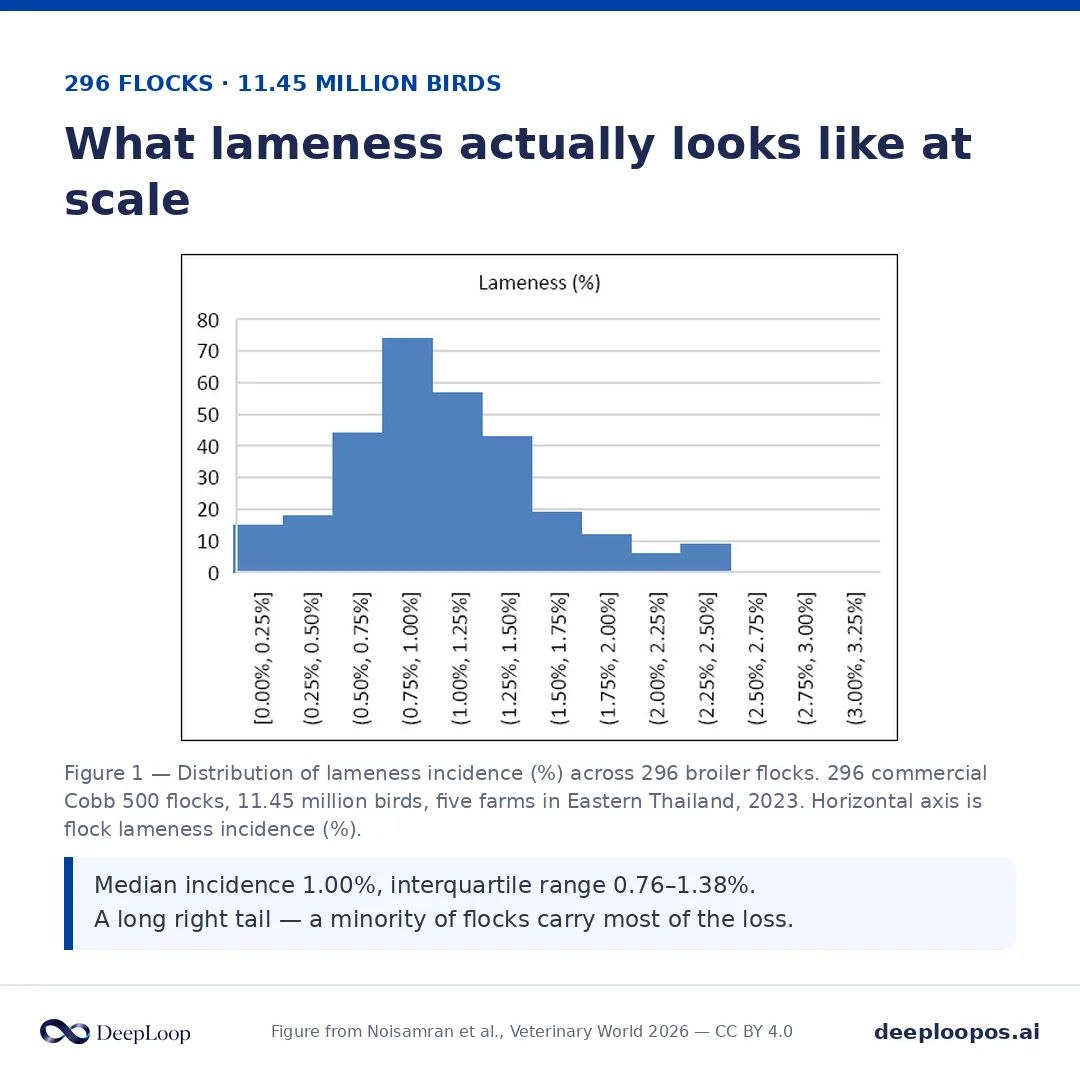
From Noisamran et al., Veterinary World 2026 (CC BY 4.0) - distribution of lameness across 296 flocks against early-life conditions.
When the numbers and the birds disagree
Every guide ends at the same place: read the chicks. Comfortable chicks spread evenly, feeding and vocalising softly. Chicks piled under the brooder are cold; chicks pushed to the walls are too hot; chicks bunched to one side are in a draught. When the controller says one thing and the birds say another, the birds are right. Chick behaviour is the real thermometer - and it only counts if someone is watching it.
Where this is heading
Brooding rewards the reading you take at 2am and punishes the one you skip. DeepLoop is building AI monitoring that reads flock distribution continuously - turning chick behaviour, the real thermometer, into a signal that never leaves the house.