Ferma Avtonomiyasining L1-L5 Darajalari
Ferma avtonomiyasi darajalari chorvachilik uchun besh darajali shkala, avtomobilni o'zgartirgan o'zi boshqarish darajalari modelida. L1-2 - allaqachon sotib olish mumkin bo'lgan avtomatlashtirish - taymerlar, sensorlar, iqlim nazoratchilari. L3 - hayvonlarning o'zini o'qiydigan va ko'rgan narsasiga amal qiladigan tizim. L4-5 - o'zi ishlaydigan, o'zini davolaydigan va yaxshilaydigan ferma. Framework DeepLoop tomonidan cho'chqa, broyler va qatlam ishlab chiqarishi uchun belgilandi.
Har bir daraja bitta savolga javob beradi: kundalik tsikldan - kuzat, tushun, qaror qil, harakat qil, o'rgan - qancha qismi odamsiz ishlaydi. Fermer maqsadni belgilaydi (cho'chqa cho'qintiruvchisida FCR, broyler uyida hayotchanlik, qatlam uyida tuxum berish darajasi); har daraja yuqoriga, ferma yo'lni ko'proq topadi. Quyidagi shkala to'liq framework.
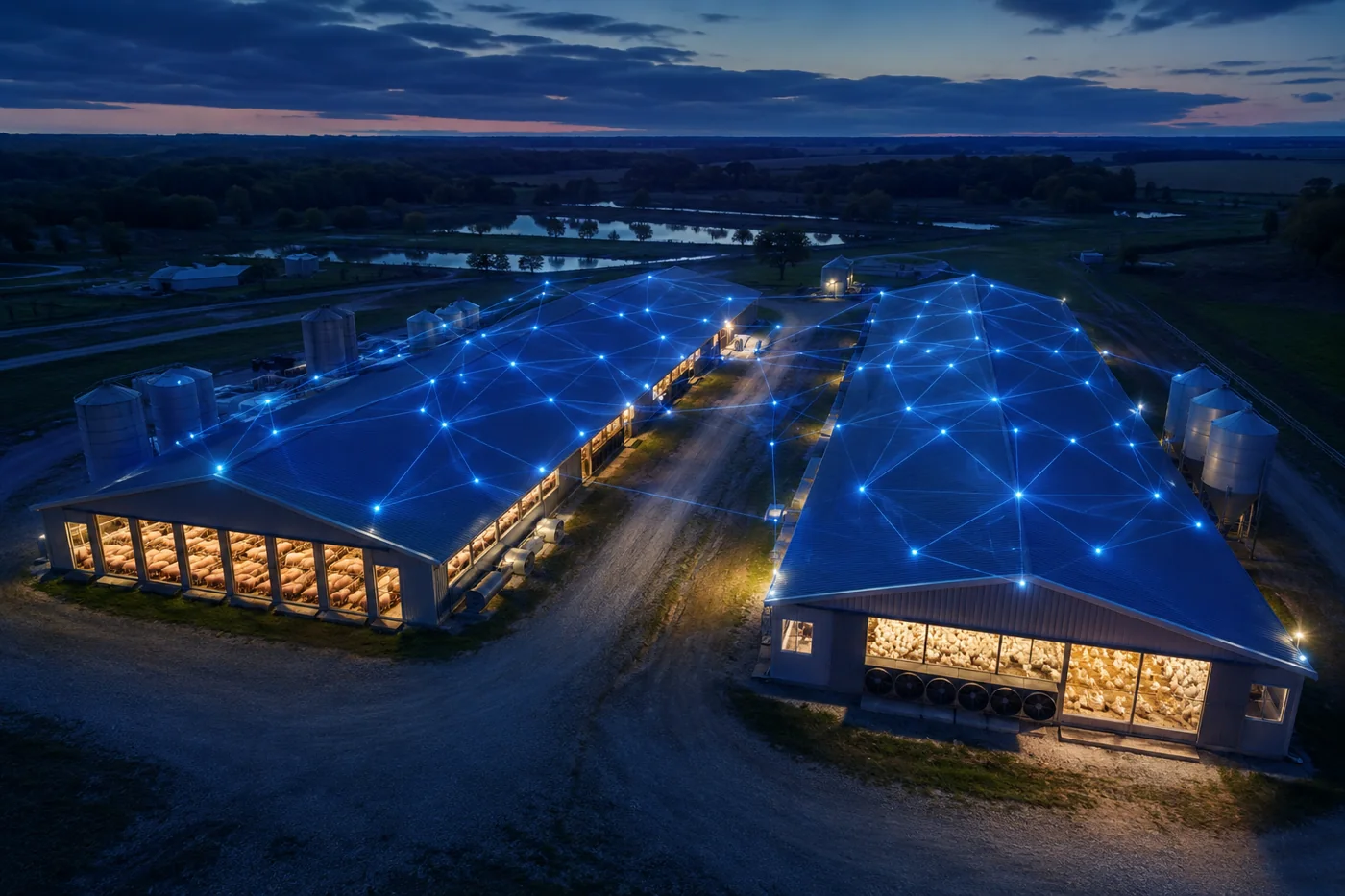

Ferma avtonomiyasining besh darajasi
Mashinalarni o'zgartirgan o'zini-o'zi boshqarish darajalari kabi - lekin bino uchun. Har bir daraja bitta maqsad sari qadam: fermer maqsadni belgilaydi - cho'chqa bordoqida FCR, broyler binosida hayotchanlik, qatlamli qushxonada tuxum berish darajasi - va ferma yo'lni topadi. L1-2 - bu hozir har qayerda sotib olsa bo'ladigan avtomatlashtirish - taymerlar, sensorlar, iqlim qutilar. L3 - DeepLoop yashaydigan joy: hayvonlarning o'zini o'qiydigan, inson ko'zidan necha kun oldin topadigan tizim - buni deyarli hech kim qilmaydi. L4-5 - biz intilayotgan joy: o'zi ishlaydigan, o'zini davolaydigan va o'zini yaxshilaydigan ferma.
Ko'rib turadigan bino
Raqam chegaradan chiqqanda signal beradigan kameralar va sensorlar. Biz siz allaqachon ishlatayotgan brendlarga ulanamiz - shunday qilib siz allaqachon ishonadigan uskunani saqlab qolasiz, biz uning ustiga quramiz.
Javob qaytaradigan bino
Avtomatlashtirilgan atrof-muhit boshqaruvi - shamollatish, iqlim, ozuqalantirish, suv va dozalash. Keng tarqalgan va keng joriy etilgan; biz uni qaytadan qurish o'rniga tashkil etilgan iqlim va uskuna hamkorlari bilan integratsiya qilamiz.
Kasallikni topadigan bino
Vazn og'ishlari, nafas xirillashi, oqsoqlik yurishi va xulq-atvor stressi qo'lda tekshiruv sezishidan kun oldin yuzaga chiqadi - birinchi tishlangan dumlardanoq tutilgan quyruq cho'qish otilishi, qatlamli qushxona bo'ylab tarqalishidan oldin tutilgan pat cho'qish, broyler podasini bosib o'tishidan oldin tutilgan nafas kasalligi. Bu har bir partiyada past o'lim va hisob-kitobda kamroq brakka chiqarish degani - yaxshi va yomon sikl o'rtasidagi farq. Buni hali hech kim uddasidan chiqmagan. Uning ostida chorva xatti-harakati asosida o‘qitilgan video asos modeli ishlaydi, shuning uchun u me'yor laboratoriyada emas, aynan sizning binongizda qanday ko‘rinishini o‘rganadi.
Yumushlarni bajaradigan bino
Kundalik jismoniy mehnat - tekshiruv, o'lganlarni yig'ish, tozalash, dezinfeksiya - qo'shimcha ishchi qo'l kerak bo'lmasdan bajariladi. Yaxshi ferma ishchisini topish allaqachon qiyin; L4'da siz ular uchun raqobatlashishni to'xtatasiz.
O'zi ishlaydigan bino
Bino o'zi o'rganishda davom etadi va hayvonlar bo'yicha ham, raqamlar bo'yicha ham yaxshilanadi. Har bir partiya unga nimadir o'rgatadi. Fermer maqsadni belgilaydi - FCR, kilogramm narxi, farovonlik chegarasi - va ferma yo'lni topadi.
Ferma avtonomiyasi darajalarini kim belgiladi?
DeepLoop chorvachilik ishlab chiqarishi uchun bu L1-L5 frameworkini belgiladi, SAE haydash avtomatlashtirish darajalari modelida, shunda ishlab chiqaruvchilar bir barn haqiqatda qanchalik avtonom ekanligi haqida umumiy tilga ega bo'lishadi.
Ko'p fermalar bugun qanday darajada?
Ko'p tijorat cho'chqa va parranda fermalari L1-L2 darajasida ishlashadi: taymerlar, sensorlar va iqlim nazoratchilari maqsadlarni ushlab turadi, lekin hayvonlarni o'ymaydi. L3 tizimlari - hayvonlarning o'zini tushunadigan - DeepLoop ishlaydigan joy.
L2 dan L3 ga o'tish uchun nima kerak?
Hayvonlarni o'qiydigan kameralar va dasturiy ta'minot - sanash, vazn, xulq-atvor, taqsimlanish - va aniqlashlarni yozuvlarga va sozlamalarga aylantiradigan tsikl. Maxsus uskuna yo'q: odatiy kameralar butun sezish qatlamini tashkil qiladi.
L5 realistikkimi?
L5 - o'zi ishlaydigan, o'zini davolaydigan va yaxshilaydigan ferma - yo'nalish, jo'natiladigan mahsulot emas. Undan past har bir daraja o'ziga qiymat keltiradi; shkalaning maqsadi siz qayerda ekanligini va keyingi qadam nima berishini bilishdir.