Úrovne autonómie farmy L1-L5
Úrovne autonómie farmy sú päťstupňová stupnica pre chov dobytka, modelovaná podľa úrovní autonómneho riadenia, ktoré zmenili autá. L1-L2 je automatizácia, ktorú môžete už kúpiť - časovače, senzory, klimatické regulátory. L3 je systém, ktorý číta samotné zvieratá a koná podľa toho, čo vidí. L4-L5 je farma, ktorá sama beží, lieči sa a zlepšuje sa. Rámec definoval DeepLoop pre výrobu ošípaných, brojlerov a nosníc.
Každá úroveň odpovedá na jednu otázku: koľko z denného cyklu - sledovať, pochopiť, rozhodnúť, konať, učiť sa - beží bez človeka v ňom. Farmár nastavuje cieľ (FCR na výkrmu ošípaných, prežívateľnosť v brojlerovej hale, znáškivosť v hale nosníc); s každou úrovňou hore nájde farma viac cesty sama. Stupnica nižšie je úplný rámec.
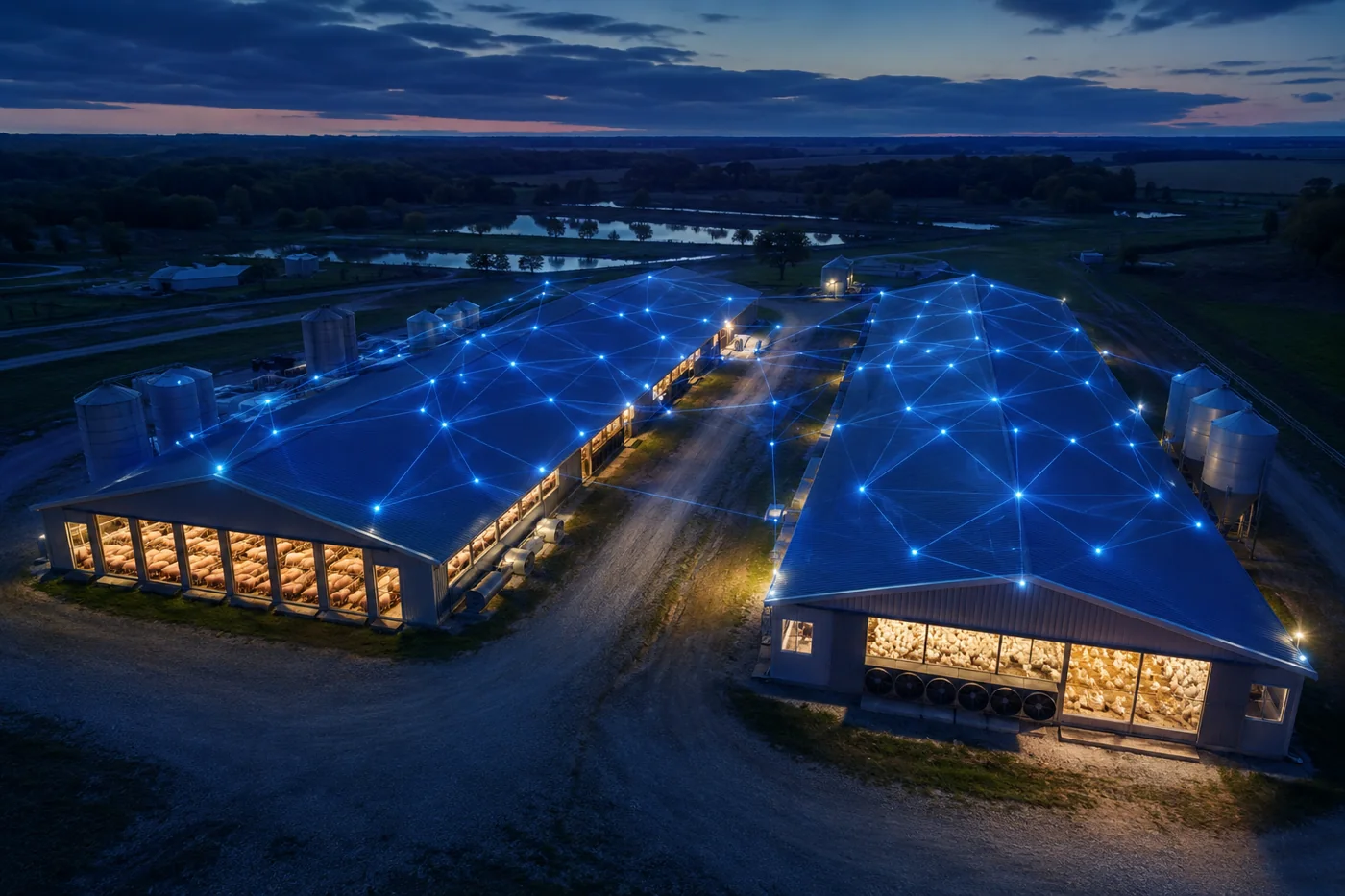

Päť úrovní autonómie farmy
Podobne ako úrovne autonómneho riadenia zmenili autá - len tentoraz pre maštaľ. Každá úroveň je krokom k jednému cieľu: farmár nastaví cieľ - FCR na výkrme ošípaných, prežívateľnosť v hale brojlerov, znášku v hale nosníc - a farma nájde cestu. L1-2 je automatizácia, ktorú dnes kúpite kdekoľvek - časovače, senzory, klimatizačné jednotky. L3 je tam, kde žije DeepLoop: systém, ktorý číta samotné zvieratá, dni pred ľudským okom - to nerobí takmer nikto iný. L4-5 je smer, kam mierime: farma, ktorá sa sama riadi, lieči aj zlepšuje.
Maštaľ, ktorú vidíte
Kamery a senzory, ktoré spustia poplach, keď číslo prekročí hranicu. Napájame sa na značky, ktoré už používate - takže si necháte hardvér, ktorému už dôverujete, a my na ňom staviame ďalej.
Maštaľ, ktorá reaguje
Automatizované riadenie prostredia - vetranie, klíma, kŕmenie, voda a dávkovanie. Bežné a široko nasadené; integrujeme sa s etablovanými partnermi pre klímu a technológie, namiesto toho, aby sme to budovali nanovo.
Maštaľ, ktorá odhalí chorobu
Odchýlky hmotnosti, dýchacie chrapoty, krívajúca chôdza a behaviorálny stres sa ukážu dní predtým, než ich zachytí manuálna kontrola - výbuch obhrýzania chvostov zachytený pri prvých ohryzených chvostoch, vyzobávanie peria zachytené skôr, než sa rozšíri halou nosníc, dýchacia epizóda zachytená skôr, než prejde celým kŕdľom brojlerov. To je nižší úhyn na turnus a menej konfiškácií pri zúčtovaní - rozdiel medzi dobrým a zlým cyklom. Toto je časť, ktorú okrem nás nikto iný nedokázal vyriešiť. Pod tým beží video foundation model trénovaný na správaní zvierat, takže sa učí, ako vyzerá normál práve vo vašej hale, nie v laboratóriu.
Maštaľ, ktorá robí prácu za vás
Bežnú fyzickú prácu - kontrolu, zber uhynutých kusov, čistenie, dezinfekciu - zvládne bez ďalšej dvojice rúk. Nájsť dobrých pracovníkov na farmu je už aj tak ťažké; pri L4 o nich prestávate súťažiť.
Maštaľ, ktorá sa riadi sama
Maštaľ sa naďalej učí sama a zlepšuje sa v starostlivosti o zvieratá aj v číslach. Každý turnus ju niečo naučí. Farmár nastaví cieľ - FCR, náklady na kg, minimálnu úroveň welfare - a farma nájde cestu.
Kto definoval úrovne autonómie farmy?
DeepLoop definoval tento rámec L1-L5 pre výrobu dobytka, modelovaný podľa úrovní automatizácie riadenia SAE, aby dal producentom spoločný jazyk pre to, ako autonómna je hal vlastne.
Na akej úrovni je väčšina fariem dnes?
Väčšina komerčných fariem ošípaných a hydiny funguje na úrovni L1-L2: časovače, senzory a klimatické regulátory, ktoré držia nastavené hodnoty, ale nečítajú zvieratá. Systémy L3 - ktoré chápu samotné zvieratá - sú tam, kde pôsobí DeepLoop.
Čo je potrebné na presun z L2 na L3?
Kamery a softvér, ktoré čítajú zvieratá - počet, hmotnosť, správanie, rozloženie - plus slučka, ktorá mení detekcie na záznamy a úpravy. Žiadny proprietárny hardvér: štandardné kamery nesú celú senzorovú vrstvu.
Je L5 realistická?
L5 - farma, ktorá sama beží, lieči sa a zlepšuje sa - je smer, nie produkt na dodanie. Každá úroveň pod ňou prináša hodnotu sama o sebe; bod stupnice je vedenie toho, kde ste a čo vám kúpna ďalší krok.