Os níveis L1-L5 de autonomia da fazenda
Os níveis de autonomia da fazenda são uma escala de cinco níveis para a pecuária, modelada segundo os níveis de direção autônoma que remodelaram a indústria automotiva. L1-L2 é a automação que você já pode comprar - temporizadores, sensores, controladores de clima. L3 é um sistema que lê os próprios animais e age conforme o que vê. L4-L5 é a fazenda que se opera, se repara e se aprimora sozinha. O arcabouço foi definido pela DeepLoop para a produção de suínos, frangos de corte e poedeiras.
Cada nível responde a uma só pergunta: quanto do ciclo diário - observar, entender, decidir, agir, aprender - roda sem uma pessoa dentro. O produtor fixa a meta (FCR do suíno de terminação, viabilidade do galpão de frangos de corte, taxa de postura do galpão de poedeiras); a cada nível acima, a fazenda encontra mais do caminho sozinha. A escala abaixo é o arcabouço completo.
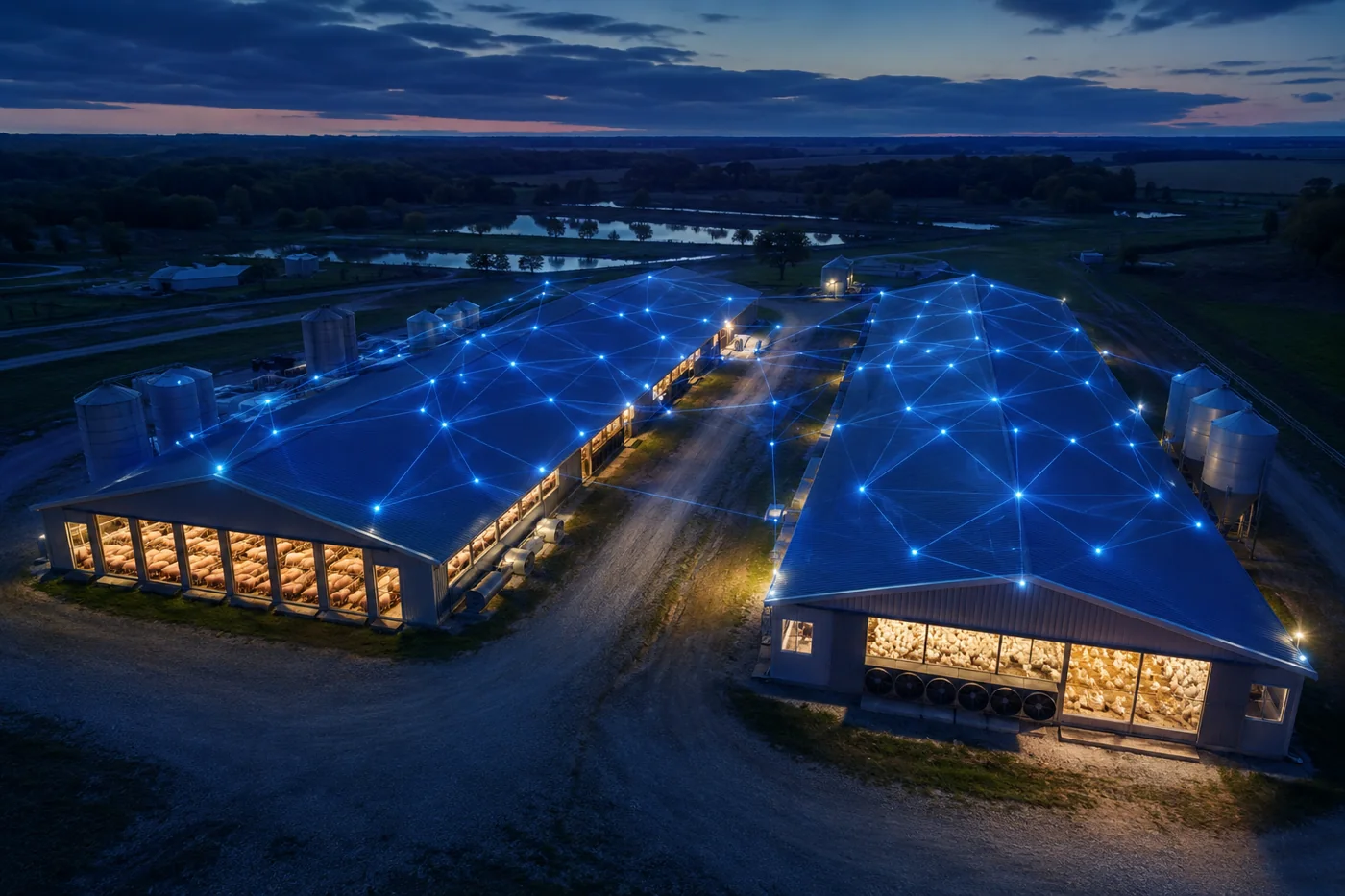

Cinco níveis de autonomia da exploração
Como os níveis de piloto automático que mudaram os carros - só que pro galpão. Cada nível é um passo rumo a um só objetivo: o produtor define a meta - FCR na terminação de suínos, viabilidade no galpão de frango, taxa de postura no galpão de poedeira - e a granja acha o caminho. L1-2 é a automação que você já compra em qualquer lugar - timer, sensor, caixa de clima. L3 é onde a DeepLoop vive: um sistema que lê os próprios animais, dias antes do olho humano - quase ninguém mais faz isso. L4-5 é pra onde estamos indo: a granja que se toca, se cuida e melhora sozinha.
O galpão que você enxerga
Câmeras e sensores que tocam o alarme quando um número passa do limite. Conectamos com as marcas que você já usa - assim você continua com o hardware em que já confia, e nós construímos em cima dele.
O galpão que reage
Controlo ambiental automatizado - ventilação, clima, alimentação, água e dosagem. Comum e amplamente implementado; integramo-nos com parceiros estabelecidos de clima e equipamentos em vez de o reconstruir.
O galpão que pega doença
Desvio de peso, ronco respiratório, jeito de andar torto e estresse comportamental aparecem dias antes da inspeção manual pegar - um surto de caudofagia pego nas primeiras caudas mordidas, bicagem de penas pega antes de se espalhar pelo galpão de poedeira, um surto respiratório pego antes de correr o lote de frango. Isso é menos mortalidade por lote e menos condenação na hora de fechar a conta - a diferença entre um ciclo bom e um ruim. Essa é a parte que mais ninguém resolveu. Por baixo corre um modelo fundacional de vídeo treinado no comportamento animal, pelo que aprende como é o normal no seu pavilhão, não num laboratório.
O galpão que faz o serviço
Trabalho físico de rotina - inspeção, recolha de mortos, limpeza, desinfecção - feito sem precisar de mais uma pessoa. Já é difícil achar bom trabalhador de granja; no L4, você para de disputar por eles.
O galpão que se toca sozinho
O galpão continua aprendendo sozinho e melhora tanto os animais quanto os números. Cada lote ensina alguma coisa. O produtor define a meta - FCR, custo por kg, piso de bem-estar - e a granja acha o caminho.
Quem definiu os níveis de autonomia da fazenda?
A DeepLoop definiu esse arcabouço L1-L5 para a produção pecuária, modelado segundo os níveis SAE de automação de direção, para dar aos produtores uma linguagem comum sobre o quão autônomo um galpão realmente é.
Em que nível estão a maioria das fazendas hoje?
A maioria das granjas comerciais de suínos e aves opera em L1-L2: temporizadores, sensores e controladores de clima que mantêm setpoints mas não leem os animais. Os sistemas L3 - que entendem os próprios animais - são onde a DeepLoop atua.
O que é preciso para passar de L2 a L3?
Câmeras e software que leem os animais - contagem, peso, comportamento, distribuição - somados ao ciclo que transforma detecções em registros e ajustes. Sem hardware proprietário: câmeras padrão dão conta de toda a camada de sensoreamento.
O L5 é realista?
L5 - a fazenda que se opera, se repara e se aprimora sozinha - é uma direção, não um produto entregue. Cada nível abaixo dele entrega valor por si só; o ponto da escala é saber onde você está e o que o próximo passo compra para você.