De L1-L5-niveaus van bedrijfsautonomie
De niveaus van bedrijfsautonomie vormen een vijftrappige schaal voor de veehouderij, gemodelleerd naar de autonoom-rijniveaus die de auto-industrie hebben hervormd. L1-L2 is de automatisering die u nu al kunt kopen - tijdschakelaars, sensoren, klimaatregelaars. L3 is een systeem dat de dieren zelf leest en handelt op wat het ziet. L4-L5 is het bedrijf dat zichzelf runt, herstelt en verbetert. Het raamwerk is door DeepLoop gedefinieerd voor varkens-, vleeskuiken- en leghennenhouderij.
Elk niveau beantwoordt één vraag: hoeveel van de dagelijkse loop - kijken, begrijpen, beslissen, handelen, leren - draait zonder mens erin. De veehouder stelt het doel (FCR van het vleesvarken, overleving in het vleeskuikenhok, legpercentage in de legstal); met elk niveau omhoog vindt het bedrijf meer van de weg zelf. De schaal hieronder is het volledige raamwerk.
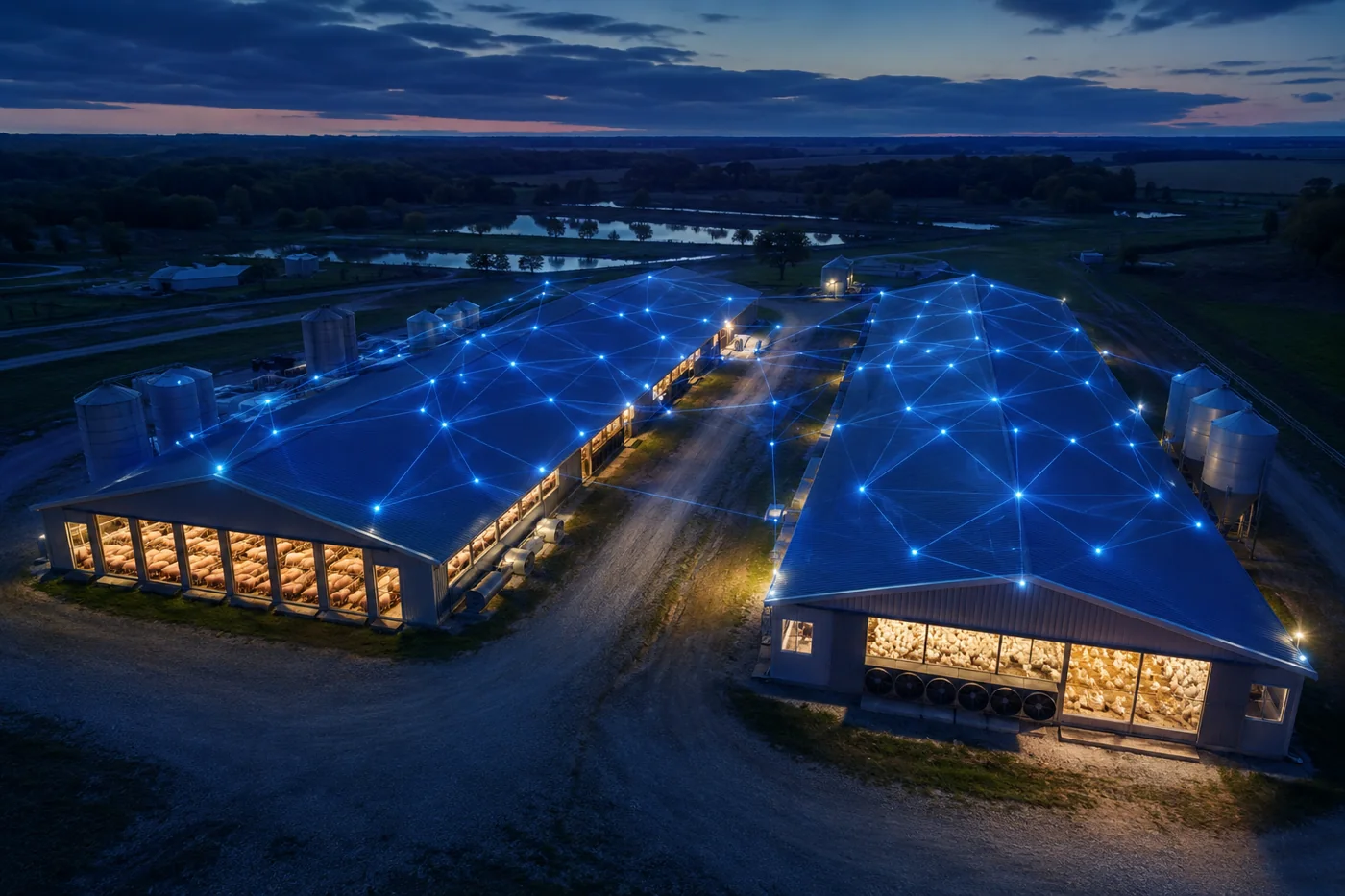

Vijf niveaus van boerderijautonomie
Net als de zelfrijdende niveaus die de auto veranderd hebben - maar dan voor de stal. Elk niveau is een stap naar één doel: de boer stelt het doel - FCR op de vleesvarkens, overleving in de vleeskuikenstal, legpercentage in de legstal - en de boerderij vindt de weg. L1-2 is de automatisering die u overal al kunt kopen - timers, sensoren, klimaatboxen. L3 is waar DeepLoop leeft: een systeem dat de dieren zelf leest, dagen vóór het menselijk oog - bijna niemand anders doet dit. L4-5 is waar we naartoe gaan: de boerderij die zichzelf draait, geneest en verbetert.
De stal die u kunt zien
Camera's en sensoren die alarm slaan zodra een cijfer over de grens gaat. Wij koppelen aan de merken die u al draait - zo houdt u de apparatuur die u al vertrouwt, en wij bouwen erop voort.
De stal die reageert
Geautomatiseerde omgevingsbesturing - ventilatie, klimaat, voeding, water en dosering. Gangbaar en breed uitgerold; wij integreren met gevestigde klimaat- en apparatuurpartners in plaats van het opnieuw te bouwen.
De stal die ziekte opspoort
Gewichtsafwijkingen, ademhalingsreutels, kreupele gang en gedragsstress komen dagen voordat handmatige inspectie ze opmerkt aan de oppervlakte - een staartbijt-uitbraak die wordt opgemerkt bij de eerste afgebeten staarten, verenpikkerij die wordt opgemerkt voordat het zich door de legstal verspreidt, een ademhalingsuitbraak die wordt opgemerkt voordat het door het vleeskuikenkoppel raast. Dat is lagere sterfte per koppel en minder afkeuringen bij de afrekening - het verschil tussen een goede en een slechte cyclus. Dit is het stuk dat niemand anders heeft opgelost. Daaronder draait een video-foundationmodel dat is getraind op diergedrag, zodat het leert hoe normaal eruitziet in úw stal, niet in een lab.
De stal die de klusjes doet
Routinematige fysieke arbeid - inspectie, kadaverafvoer, reiniging, ontsmetting - gedaan zonder een extra paar handen erbij te halen. Goede stalmedewerkers vinden is al moeilijk; bij L4 hoeft u niet meer om hen te concurreren.
De stal die zichzelf runt
De stal blijft op eigen kracht leren en wordt beter, zowel voor de dieren als voor de cijfers. Elk koppel leert het iets. De boer stelt het doel - FCR, kosten per kg, welzijnsondergrens - en de boerderij vindt het pad.
Wie heeft de niveaus van bedrijfsautonomie gedefinieerd?
DeepLoop heeft dit L1-L5-raamwerk voor de veehouderij gedefinieerd, gemodelleerd naar de SAE-niveaus van rijautomatisering, om producenten een gemeenschappelijke taal te geven voor hoe autonoom een stal werkelijk is.
Op welk niveau zitten de meeste bedrijven vandaag?
De meeste commerciële varkens- en pluimveebedrijven draaien op L1-L2: tijdschakelaars, sensoren en klimaatregelaars die setpoints vasthouden maar de dieren niet lezen. L3-systemen - die de dieren zelf begrijpen - zijn het terrein waarop DeepLoop opereert.
Wat is er nodig om van L2 naar L3 te gaan?
Camera's en software die de dieren lezen - aantal, gewicht, gedrag, verdeling - plus de loop die detecties omzet in registraties en aanpassingen. Geen eigen hardware: standaardcamera's dragen de hele sensingslaag.
Is L5 realistisch?
L5 - het bedrijf dat zichzelf runt, herstelt en verbetert - is een richting, geen geleverd product. Elk niveau daaronder levert zelfstandig waarde; het punt van de schaal is weten waar u staat en wat de volgende stap u oplevert.