Ūkio autonomijos lygiai L1-L5
Ūkio autonomijos lygiai yra penkių lygių skalė gyvulininkystei, modeliuota pagal savivairiavimo lygius, kurie pakeitė automobilių pramonę. L1-L2 yra automatika, kurią jau galite nusipirkti - laikmačiai, davikliai, klimato valdikliai. L3 yra sistema, kuri skaito pačius gyvulius ir veikia pagal tai, ką mato. L4-L5 yra ūkis, kuris pats veikia, gydo ir tobulėja. Framework apibrėžė DeepLoop kiaulių, broilerių ir vištų gamybai.
Kiekvienas lygis atsako į vieną klausimą: kiek iš kasdieninio ciklo - stebėti, suprasti, spręsti, veikti, mokytis - vyksta be žmogaus. Ūkininkas nustato tikslą (FCR baigiamųjų kiaulių garduose, išgyvenamumas broilerių patalpose, kiaušinidės rodiklis vištų patalpose); kiekvienas aukštesnis lygis leidžia ūkiui daugiau rasti kelio patį. Žemiau pateiktoje skalėje yra pilnas framework.

Penki ūkio autonomijos lygiai
Kaip savaeigių automobilių lygiai, pertvarkę automobilių pramonę - tik tvartui. Kiekvienas lygis yra žingsnis link vieno tikslo: ūkininkas nustato tikslą - FCR penimų kiaulių grandyje, gyvybingumą broilerių tvarte, dėjimo intensyvumą vištų dedeklių patalpoje - o ūkis randa kelią. L1-2 yra automatizacija, kurią jau šiandien galite nusipirkti bet kur - laikmačiai, jutikliai, mikroklimato dėžės. L3 yra ten, kur gyvena DeepLoop: sistema, kuri pati perskaito gyvulius dienomis anksčiau nei žmogaus akis - beveik niekas kitas to nedaro. L4-5 yra ten, kur mes einame: ūkis, kuris pats veikia, gydosi ir tobulėja.
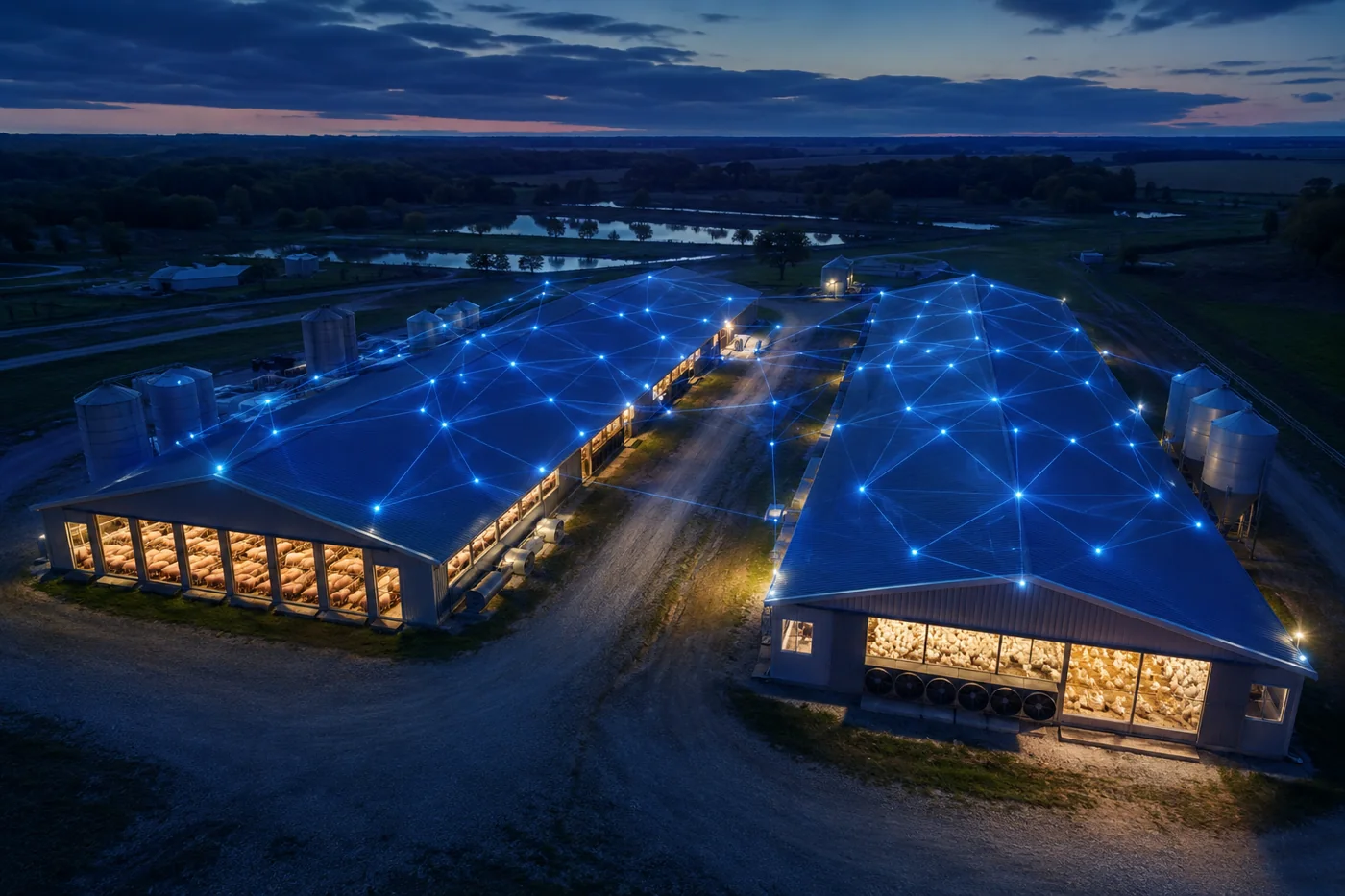
Tvartas, kurį matote
Kameros ir jutikliai, kurie suskamba pavojaus signalu, kai skaičius peržengia ribą. Mes prisijungiame prie prekės ženklų, kuriuos jau naudojate - taigi išlaikote įrangą, kuria jau pasitikite, o mes statome ant jos.
Tvartas, kuris reaguoja
Automatizuotas aplinkos valdymas - vėdinimas, mikroklimatas, šėrimas, vanduo ir dozavimas. Dažnai ir plačiai įdiegta; mes integruojamės su žinomais mikroklimato ir įrangos partneriais, o ne kuriame iš naujo.
Tvartas, kuris pastebi ligą
Svorio nuokrypiai, kvėpavimo karkalai, šlubavimo eisena ir elgsenos stresas išryškėja dienomis anksčiau, nei juos pagauna rankinė apžiūra - uodegų kandžiojimo protrūkis pagaunamas, kai kandžiuojamos pirmosios uodegos, plunksnų pešimas pagaunamas prieš jam plintant per vištų dedeklių patalpą, kvėpavimo proveržis pagaunamas prieš jam apimant broilerių pulką. Tai mažesnis kritimas partijoje ir mažiau brokavimo atsiskaitant - skirtumas tarp gero ir blogo ciklo. Šitos dalies dar niekas kitas neįveikė. Po juo veikia gyvulių elgsena apmokytas vaizdo pamatinis modelis, todėl jis išmoksta, kaip normalu atrodo būtent jūsų tvarte, o ne laboratorijoje.
Tvartas, kuris atlieka ūkio darbus
Kasdienis fizinis darbas - apžiūra, kritusių gyvulių surinkimas, valymas, dezinfekcija - atliekamas be papildomos poros rankų. Gerus ūkio darbuotojus rasti jau ir taip sunku; pasiekus L4, nustojate dėl jų konkuruoti.
Tvartas, kuris veikia pats
Tvartas nuolat mokosi pats ir gerėja tiek gyvulių priežiūroje, tiek skaičiuose. Kiekviena partija jį ko nors išmoko. Ūkininkas nustato tikslą - FCR, kaštą už kg, gerovės ribą - o ūkis randa kelią.
Kas apibrėžė ūkio autonomijos lygius?
DeepLoop apibrėžė šį L1-L5 framework gyvulininkystės gamybai, modeliuojant SAE savivairiavimo lygius, kad gamintojai turėtų bendrą kalbą apie tai, kiek autonominės iš tikrųjų yra tvarto įranga.
Kuriame lygyje yra dauguma ūkių šiandien?
Dauguma komercinių kiaulių ir paukščių ūkių veikia L1-L2 lygyje: laikmačiai, davikliai ir klimato valdikliai, kurie palaiko nustatytas reikšmes, bet neskaito gyvulių. L3 sistemos - kurios supranta pačius gyvulius - yra ten, kur veikia DeepLoop.
Kas reikalinga perėjimui iš L2 į L3?
Kameros ir programinė įranga, kurios skaito gyvulius - skaičių, svorį, elgseną, pasiskirstymą - bei ciklas, kuris aptikimus verčia įrašais ir pataisymais. Be nuosavybinės įrangos: standartinės kameros atlieka visą sensorių darbą.
Ar L5 yra realus?
L5 - ūkis, kuris pats veikia, gydo ir tobulėja - yra kryptis, ne prekinis produktas. Kiekvienas žemesnis lygis suteikia vertės savo ruožtu; skalės prasmė yra žinoti, kur esate ir ką suteikia jums sekantis žingsnis.