L1-L5 stig búsjálfstæðisins
Stigin búsjálfstæðis eru fimm stiga kvarði fyrir búfjárframleiðslu, líkt og sjálfakstursstigin sem endurmótuðu bíla. L1-L2 er sjálfvirkni sem þú getur nú þegar keyrt - tímarofar, skynjarar, loftslagsstjórnar. L3 er kerfi sem les dýrin sjálf og bregst við því sem það sér. L4-L5 er búið sem keyrir, læknar og bætir sig sjálft. Ramminn var skilgreindur af DeepLoop fyrir svína-, kjúklinga- og varphænur framleiðslu.
Hvert stig svaraði einni spurningu: hvað af daglegu lykkjunni - vakta, skilja, ákveða, bregðast, læra - keyrir án manns í. Bóndinn setur markið (FCR á svínaeldinu, lifun í kjúklingahúsinu, varphlutfall í varphúsinu); með hvert stig uppá finnur búið meira af leiðinni sjálf. Kvarðinn hér fyrir neðan er fullur rammi.
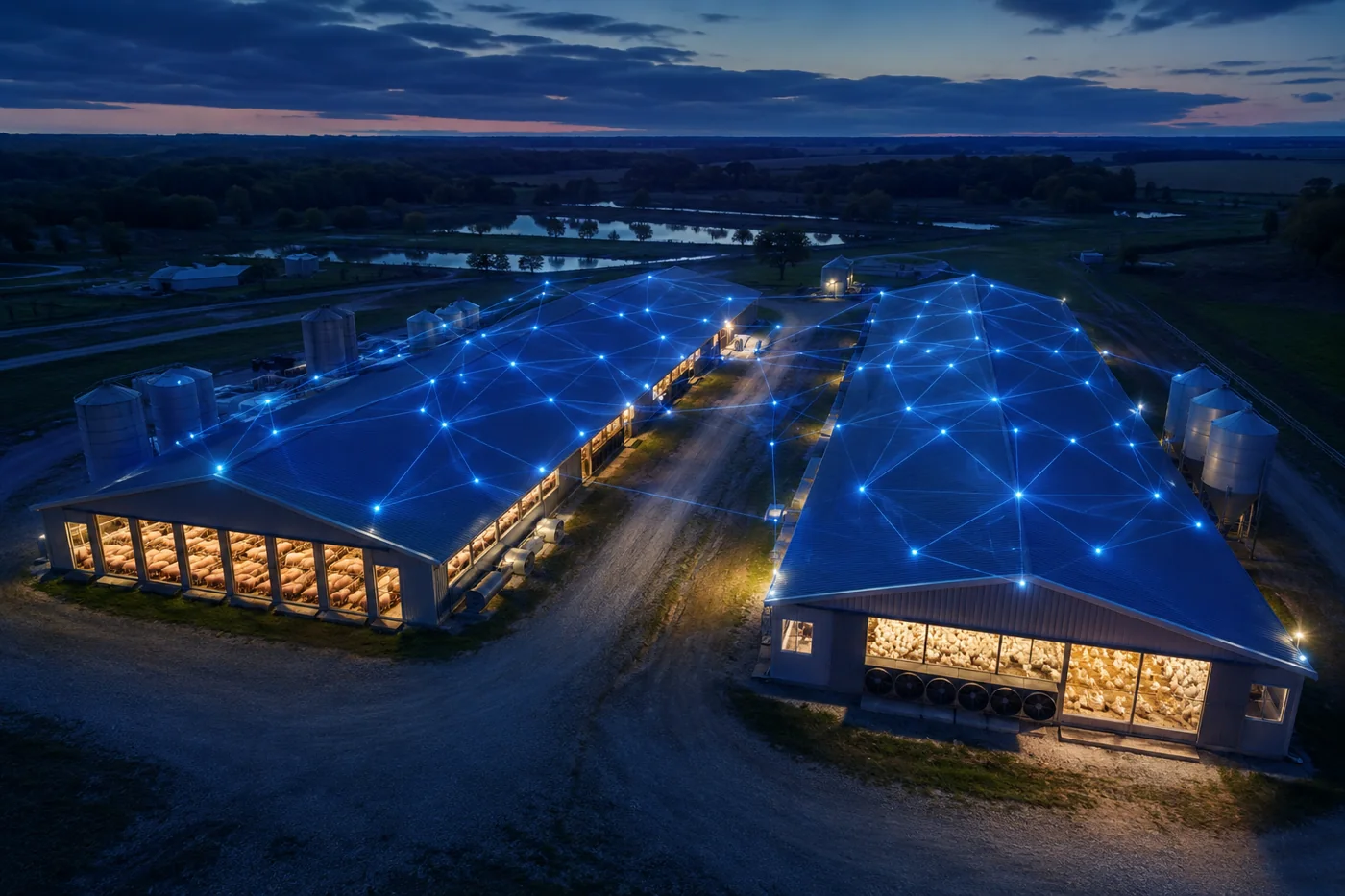

Fimm stig búsjálfvirkni
Eins og sjálfaksturstigin sem endurmótuðu bíla - en fyrir fjósið. Hvert stig er skref í átt að einu markmiði: bóndinn setur markið - FCR á svínaeldinu, lífslíkur í kjúklingahúsinu, varphlutfall í varphænsnahúsinu - og búið finnur leiðina. L1-2 er sjálfvirknin sem þú getur nú þegar keypt hvar sem er - tímarofar, skynjarar, loftslagskassar. L3 er þar sem DeepLoop lifir: kerfi sem les dýrin sjálf, dögum á undan mannsauganu - nánast enginn annar gerir þetta. L4-5 er stefnan okkar: búið sem rekur sig, læknar sig og bætir sig sjálft.
Fjósið sem þú sérð
Myndavélar og skynjarar sem hringja bjöllunni þegar tala fer yfir mörkin. Við tengjumst vörumerkjunum sem þú keyrir nú þegar - svo þú heldur vélbúnaðinum sem þú treystir, og við byggjum ofan á hann.
Fjósið sem bregst við
Sjálfvirk umhverfisstýring - loftun, loftslag, fóðrun, vatn og skömmtun. Algengt og víða útbreitt; við samþættumst rótgrónum loftslags- og búnaðarsamstarfsaðilum frekar en að endurbyggja það.
Fjósið sem grípur veikindi
Þyngdarfrávik, öndunarhljóð, helti í göngulagi og hegðunarstreita koma upp dögum áður en handvirk skoðun nær þeim - rófarbitafaraldur grippinn við fyrstu bitnu rófurnar, fjaðratínsla gripin áður en hún breiðist um varphænsnahúsið, öndunarsjúkdómur gripinn áður en hann hleypur um kjúklingahópinn. Það eru lægri afföll á hverja lotu og færri förganir við uppgjör - munurinn á góðri lotu og slæmri. Þetta er hlutinn sem enginn annar hefur náð tökum á. Undir því keyrir myndbands-grunnlíkan þjálfað á hegðun búfjár, svo það lærir hvernig eðlilegt ástand lítur út í þínu húsi, ekki á rannsóknarstofu.
Fjósið sem sinnir verkunum
Rútínubundin líkamleg vinna - skoðun, affallasöfnun, þrif, sótthreinsun - sinnt án þess að þurfa aðra manneskju til. Það er nú þegar erfitt að finna gott starfsfólk á bú; á L4 hættir þú að keppa um það.
Fjósið sem rekur sig sjálft
Fjósið heldur áfram að læra sjálft og batnar bæði í dýrunum og tölunum. Hver lota kennir því eitthvað. Bóndinn setur markið - FCR, kostnað á kg, velferðargólf - og búið finnur leiðina.
Hver skilgreindi stigin búsjálfstæðisins?
DeepLoop skilgreindi þennan L1-L5 ramma fyrir búfjárframleiðslu, byggður á SAE stigum sjálfaksturs, til að gefa framleiðendum sameiginlegt tungumál um hve sjálfstætt fjósið í raun er.
Á hvaða stigi eru flestu bú í dag?
Flest atvinnusvína- og kjúklingabú starfa á L1-L2: tímarofar, skynjarar og loftslagsstjórnar halda stillipunktum en lesa ekki dýrin. L3 kerfi - sem skilja dýrin sjálf - eru þar sem DeepLoop starfar.
Hvað er þörf til að flytja sig frá L2 í L3?
Myndavélar og hugbúnaður sem lesa dýrin - talning, þyngd, atferli, dreifing - auk lykkjunnar sem breytir greiningum í skrár og stillingar. Enginn sértækur vélbúnaður: staðlaðar myndavéla bera allan skynjunarlaginn.
Er L5 raunhæft?
L5 - búið sem keyrir, læknar og bætir sig sjálft - er stefna, ekki framleidd vara. Hvert stig fyrir neðan skilar gildi sjálfstætt; tilgangurinn með kvarðann er að vita hvar þú ert og hvað næsta skrefið skilar þér.