DeepLoop টিম · 2026-07-13
শীতকালীন বায়ুচলাচল: Ross, Cobb এবং তথ্য আসলে কী বলে
শীতকালীন বায়ুচলাচলই সেই জায়গা যেখানে ব্রয়লার পালনের ফলাফল নীরবে জয়ী হয় বা হারানো হয়। প্রতি শীতে, তাপমাত্রা ধরে রাখতে এবং জ্বালানি বাঁচাতে ঘরগুলো শক্ত করে বন্ধ করে দেওয়া হয় - প্যানেলে সব ঠিক দেখায়, অথচ অ্যামোনিয়া ও CO₂ এমন পর্যায়ে পৌঁছায় যা Ross ও Cobb উভয় ব্যবস্থাপনা নির্দেশিকাই সতর্ক করে, এবং ছোট ছানাদের ক্ষতি পরবর্তী পরিদর্শনের জন্য অপেক্ষা করে না।
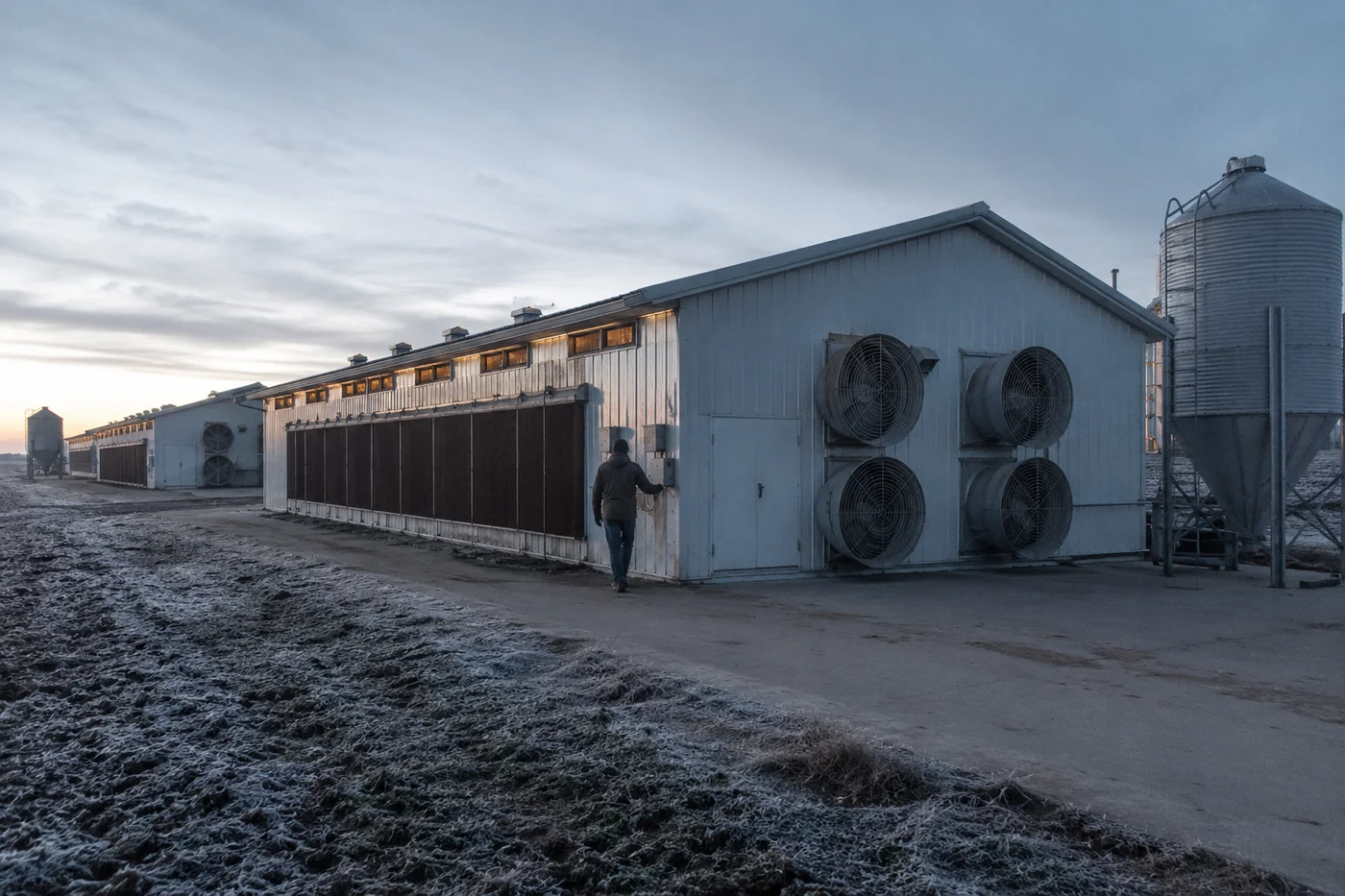
বদ্ধ ঘরের সমস্যা
সমস্যা এই নয় যে টিমগুলো লক্ষ্যমাত্রা জানে না। সমস্যা হলো সেগুলো দিনে ২৪ ঘণ্টা, প্রতিটি ঘরে ধরে রাখা যেকোনো পরিদর্শন সূচির পক্ষে যাচাইযোগ্য নয়। একজন ব্যবস্থাপক হয়তো দিনে তিনবার প্রতিটি ঘর পরিদর্শন করেন। সমস্যা পরিদর্শনের জন্য অপেক্ষা করে না - কাশি শুরু হয় রাত ২টায়, ঝাঁক বাঁধে ঘর ৭-এ যখন ব্যবস্থাপক ঘর ২-এ থাকেন।
Ross এবং Cobb আসলে কী নির্দিষ্ট করে
Ross ও Cobb-এর নিজস্ব ব্যবস্থাপনা নির্দেশিকা সংখ্যাগুলোতে একমত - বয়স অনুযায়ী সর্বনিম্ন বায়ুচলাচল হার ও ঘরের তাপমাত্রা, ফ্যান চক্রের সময়, এবং উভয় জাতের ভাগ করা বায়ু-গুণমান সীমা - অ্যামোনিয়া ১০ ppm-এর নিচে, কার্বন ডাইঅক্সাইড ৩,০০০ ppm-এর নিচে। নিচের চার্টটি উভয় তথ্যসূত্র এক জায়গায় এনেছে।
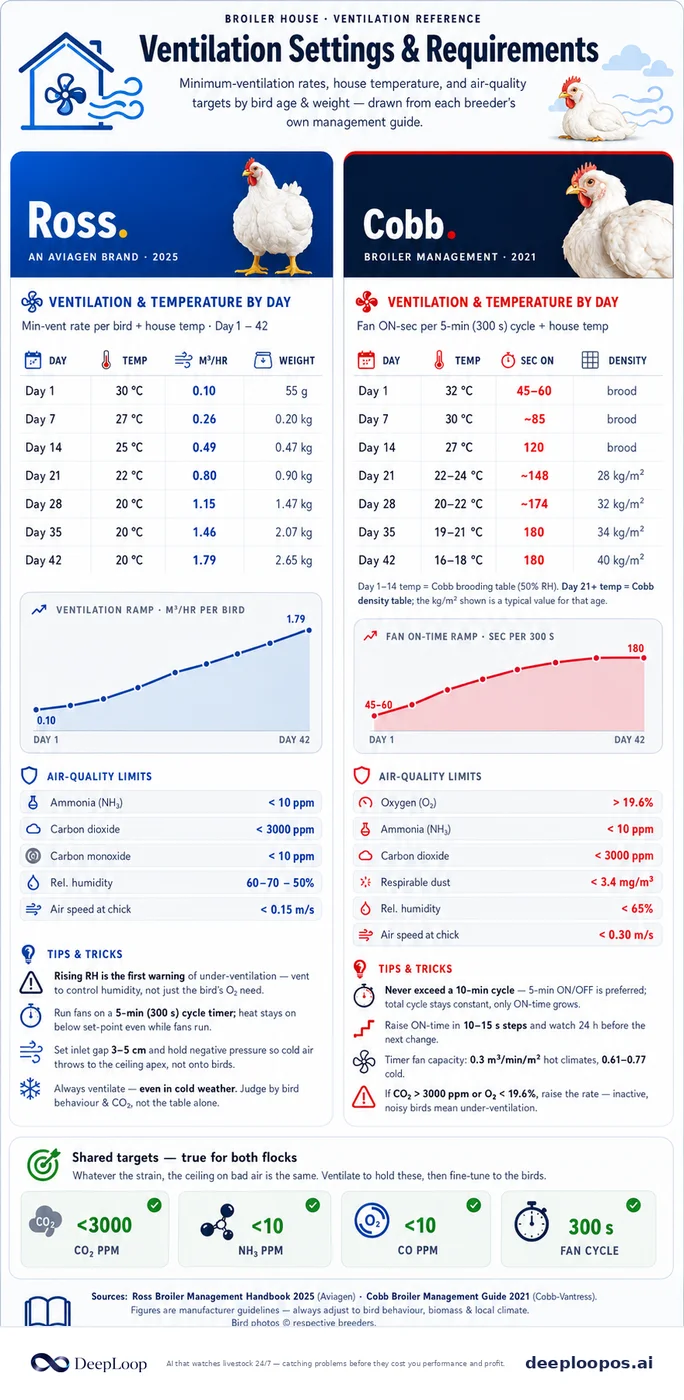
৪২ দিনের ব্রয়লার পালন জুড়ে Ross ও Cobb-এর সর্বনিম্ন বায়ুচলাচল ও বায়ু-গুণমান লক্ষ্যমাত্রা।
ক্যামেরার প্রমাণ এটি সত্যি
UNICAMP ও UNESP-এর গবেষকরা (Massari প্রমুখ, Animals, ২০২২, CC BY ৪.০-এ প্রকাশিত) একটি ব্রয়লার পেনের ওপরের দৃশ্য থেকে দুটি কম্পিউটার-ভিশন পরিমাপ তৈরি করেছিলেন - একটি ক্লাস্টার সূচক এবং একটি অস্থিরতা সূচক - এবং পালনের পরিবেশের সাথে ঝাঁকের চলাফেরা কীভাবে পরিবর্তিত হয় তা ট্র্যাক করেছিলেন। তাদের প্রতিবেদন: থার্মোনিউট্রাল (আরামদায়ক) অবস্থায় চলাফেরা ধারাবাহিকভাবে বেশি ছিল, এবং তাপ চাপ কার্যকলাপ উল্লেখযোগ্যভাবে কমিয়ে দিয়েছিল। সমৃদ্ধকরণ ক্লাস্টারিং বাড়িয়েছিল, এবং বিশেষত তাপ চাপের অধীনে পাখিরা সমৃদ্ধকরণ বস্তুর চারপাশে জড়ো হতো।
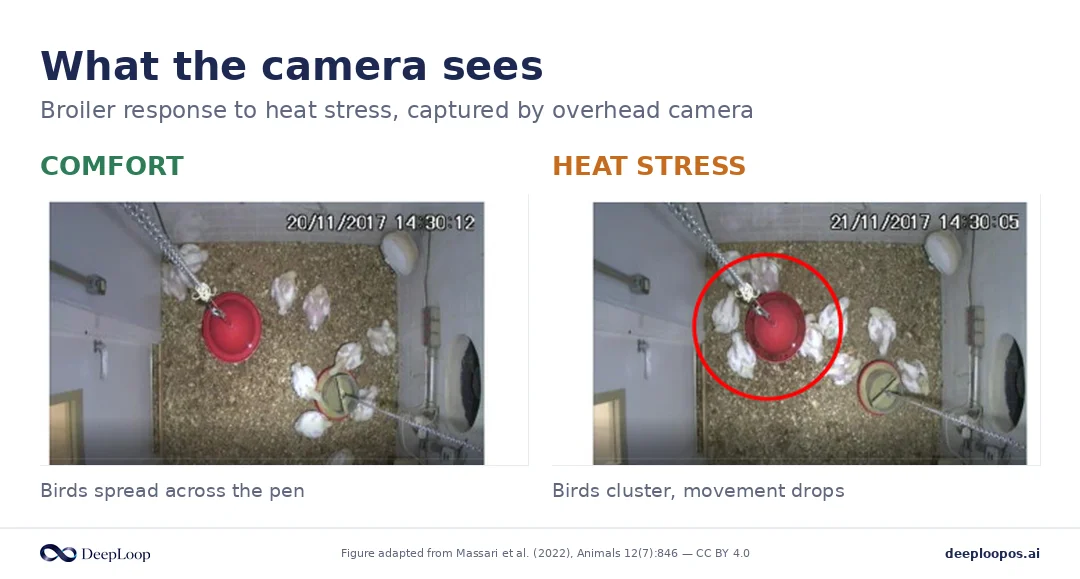
আরামদায়ক বনাম তাপ চাপে একই পেন - পাখির বিতরণে দৃশ্যমান পার্থক্য, কোনো সেন্সরের প্রয়োজন নেই।
কেন বদ্ধ ঘর নিরাপদ ঘর নয়
বন্ধ করে দিলে শুধু গ্যাস আটকে যায় না - এটি বাতাসের পদার্থবিজ্ঞানই পরিবর্তন করে দেয়। জর্জিয়া বিশ্ববিদ্যালয়ের বায়ুচলাচল তথ্য দেখায় যে বাইরে ২১°C হলে, একটি সাধারণ পাশ্বাল ইনলেট থেকে আসা বাতাস সিলিং বরাবর প্রায় ৮ মিটার ভ্রমণ করে তারপর পাখির উচ্চতায় নেমে আসে। বাইরে -১°C হলে - একই ইনলেট, একই খোলা, একই স্ট্যাটিক চাপ - সেই পথ প্রায় ৩.৫ মিটারে নেমে আসে। কন্ট্রোলারে কিছুই বদলায়নি। ঠান্ডা বাতাস কেবল ঘন: এটি দ্রুত তার জেট হারায় এবং ঘরের কেন্দ্রে পৌঁছাতে ব্যর্থ হয়, সিলিংয়ে উষ্ণ বাতাসের সাথে মিশতে না দিয়ে সরাসরি পাখির ওপর পড়ে। একটি শীতের ড্রাফট আসলে এটাই - নষ্ট ফ্যান নয়, বরং এমন একটি সিস্টেম যা ঠিক সেভাবেই কাজ করছে যেমনটি সেট করা হয়েছিল, এমন আবহাওয়ায় যার জন্য সেট করা হয়নি।
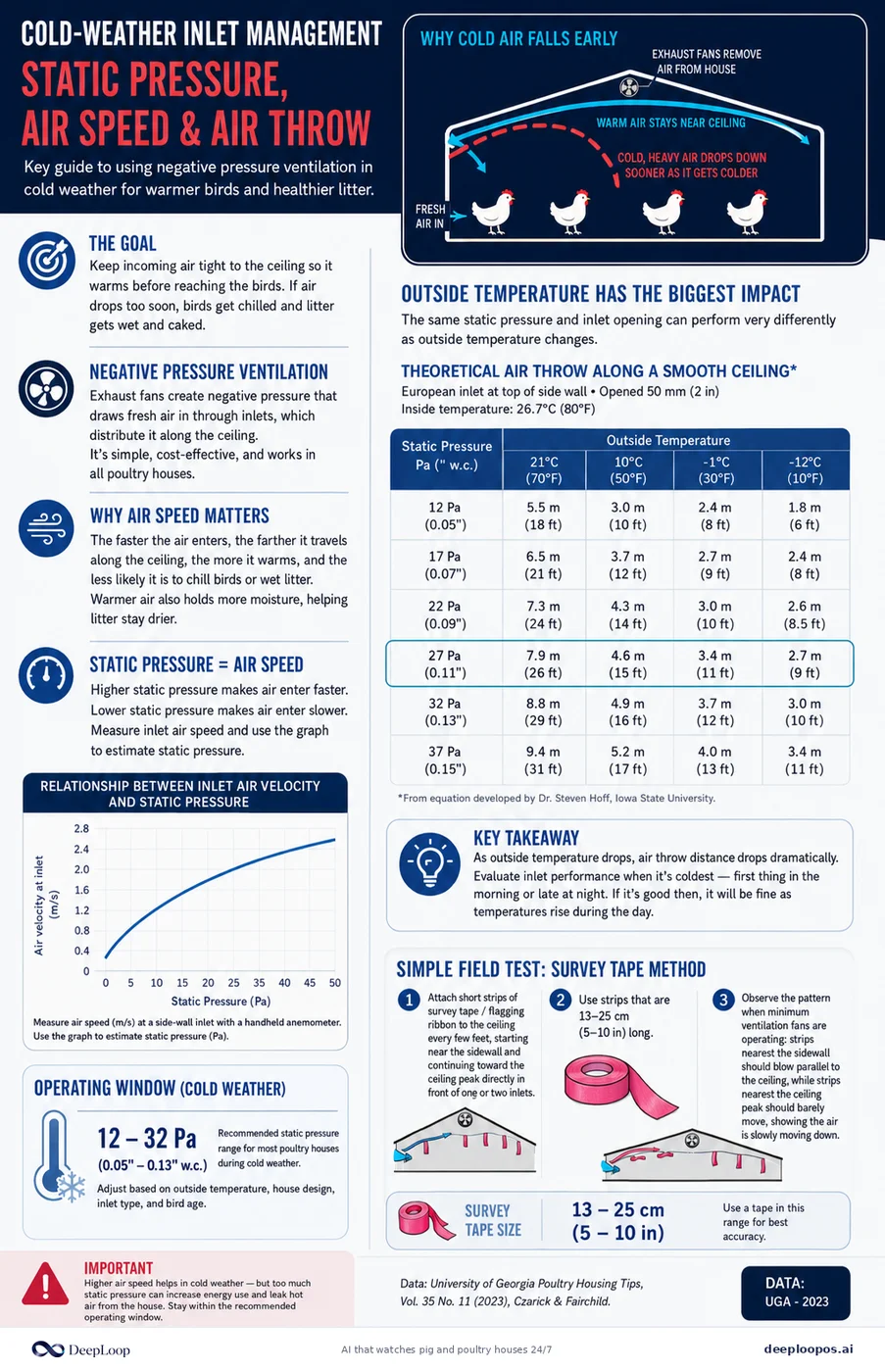
বাইরের তাপমাত্রা অনুযায়ী স্ট্যাটিক চাপ ও ইনলেট বায়ুপ্রবাহ - জর্জিয়া বিশ্ববিদ্যালয় পোল্ট্রি বিজ্ঞান বিভাগ।
এটি কোথায় এগোচ্ছে
DeepLoop এমন একটি এআই পর্যবেক্ষণ ব্যবস্থা তৈরি করছে যা পরিদর্শনের মধ্যবর্তী সময়ে কী ঘটে তা দেখে - একটি ক্যামেরা যা দেখতে পারে সেই একই আচরণগত সংকেত, রাত ২টায়, প্রতিটি ঘরে, একজন অভিজ্ঞ ব্যবস্থাপকের দরজায় দাঁড়িয়ে যে পড়াশোনা করেন সেই একই পড়ায় রূপান্তর করে। সেই পড়া প্রতিস্থাপন করা নয়। প্রতিদিনের প্রতিটি ঘণ্টায় তা প্রসারিত করা।